
Rottweiler
The Rottweiler is one of India's most commanding guard dog breeds -- powerful, deeply loyal, and surprisingly gentle with the families they love. Originally bred as a working herder and protector in Germany, Rottweilers thrive in Indian homes when given early training, structured exercise, and proper nutrition. With the right care, they are devoted companions who adapt to city apartments and large bungalows alike.
How to Care for a Rottweiler
About Rottweilers
The Rottweiler is one of the oldest herding breeds in recorded history a working dog at heart, now thriving as a loyal family protector across Indian homes from Bengaluru to Lucknow. Descended from the Roman Empire's drover dogs, the Rottweiler was refined in the German town of Rottweil, where it earned the name "Rottweiler Metzgerhund" the Butcher's Dog of Rottweil prized for herding cattle, pulling carts, and guarding both livestock and property. Today, Vettofit's veterinary team recognises the Rottweiler as one of the most capable and misunderstood breeds in Indian pet culture.
In India, the Rottweiler occupies a unique space: it is widely sought as a guard dog, yet at its best, it is an affectionate, calm, and deeply bonded family companion. These are not aggressive dogs by nature they are confident, observant, and deeply loyal to those they trust. The aggression that people associate with the breed is almost always the result of poor socialisation, inadequate training, or irresponsible handling. A well-raised Rottweiler is steady, dependable, and gentle with its own family, including children it has grown up alongside.
Owning a Rottweiler in India carries significant responsibility. This is a powerful breed that requires an experienced or committed handler, structured training from puppyhood, and consistent exercise. Rottweilers are not a breed for passive ownership they thrive when given a purpose, a routine, and the mental engagement that matches their intelligence. For the right Indian pet parent, however, a Rottweiler is one of the most rewarding companions possible.
Key Facts: Rottweiler at a Glance
- Lifespan: 8 to 10 years in India (with optimal care)
- Average weight: Males 45 to 60 kg, Females 35 to 48 kg
- Daily exercise: 60 to 90 minutes minimum (structured activity)
- Shedding level: Moderate - heavier blowout March to June
- Ideal for: Experienced pet parents, 2BHK and above, homes with outdoor access
- Climate suitability: Manageable in most Indian cities with shade, hydration, and timed exercise
- Monthly cost in India: Approximately Rs. 8,000 to Rs. 18,000 (food, grooming, vet care combined)
Breed Appearance, Size & Weight
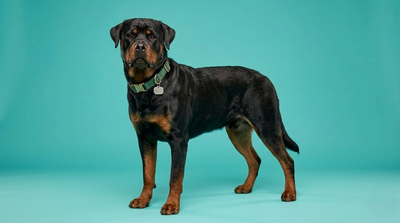
The Rottweiler presents one of the most immediately recognisable silhouettes in the dog world. Adult male Rottweilers in India typically weigh between 45 and 60 kg, with females ranging from 35 to 48 kg their muscular frame demands structured nutrition to stay lean and joint-healthy. Males stand 61 to 69 cm at the shoulder; females typically measure 56 to 63 cm. This is a compact, powerful build -- not height, but density. Every part of the Rottweiler communicates strength and purpose.
The coat is short, dense, and flat-lying a double coat with a coarser outer layer and a softer undercoat. The classic colour is black with clearly defined rich tan, mahogany, or rust markings over the eyes, on the cheeks, muzzle, chest, legs, and beneath the tail. The head is broad with a moderately arched forehead, and the expression is alert and self-assured without being aggressive. The tail is traditionally docked in some countries, though natural tails are increasingly common in India.
Males
Height: 61 to 69 cm (24 to 27 inches) at shoulder. Weight: 45 to 60 kg. Broader head, heavier bone structure, deeper chest. Full physical maturity reached at 18 to 24 months; behavioural maturity often not until 3 years.
Females
Height: 56 to 63 cm (22 to 25 inches) at shoulder. Weight: 35 to 48 kg. Slightly finer build than males but equally muscular. On average, female Rottweilers live 10 to 12 months longer than males a meaningful difference to factor into lifetime care planning.
Coat
Short, dense double coat. Outer coat is straight and coarse; undercoat is present on the neck and thighs (varies by individual and climate). Sheds moderately year-round with a noticeable increase during March to June in most Indian cities.
Recognised Colours
Black and Tan, Black and Mahogany, Black and Rust. Markings always appear in specific defined locations. Any other colour or pattern (such as red, blue, or albino) is outside breed standard and typically indicates irresponsible breeding.
Grooming
The Rottweiler's short, dense coat is deceptively low-maintenance in appearance but requires consistent care to stay healthy in Indian conditions. Rottweilers shed moderately year-round and experience heavier coat blowout between March and June ahead of India's monsoon season -- weekly brushing in summer becomes essential, not optional. Daily brushing during peak shedding months removes dead undercoat before it embeds into furniture and prevents the kind of skin irritation that builds when shed hair traps moisture against the skin in humid cities like Chennai, Kolkata, or coastal Mumbai.
Brushing Routine
Outside peak shedding season, brushing once or twice weekly with a rubber curry brush or a short-bristle slicker brush is sufficient. During March to June, increase to four to five times weekly. Always brush in the direction of coat growth. A de-shedding tool used once weekly during blowout season will significantly reduce the amount of hair around the house. The Rottweiler's coat is not prone to tangling or matting, so this process is quick typically 10 to 15 minutes per session.
Bathing
Bathe your Rottweiler once every 6 to 8 weeks under normal conditions. In India's monsoon months (July to September), increase bathing frequency to once every 3 to 4 weeks to prevent fungal skin infections caused by persistent damp skin. Always use a dog-specific shampoo with a neutral pH. After any walk in monsoon conditions, wipe down paws, underbelly, and groin area thoroughly these zones trap moisture and are the most common sites for fungal overgrowth in Indian Rottweilers.
Ears, Nails, and Teeth
Check the ears weekly for redness, odour, or dark discharge these are early signs of yeast or bacterial infection, especially common during humidity spikes. Gently wipe visible ear surfaces with a vet-approved cleanser on a cotton ball. Never probe deeper than the visible canal. Trim nails every 3 to 4 weeks untrimmed nails alter the dog's gait and compound joint pressure in an already joint-sensitive breed. Introduce nail trimming from puppyhood so the adult Rottweiler accepts it calmly. Brush teeth two to three times weekly with a dog-safe toothpaste to prevent the tartar buildup that large-breed dogs are prone to.
Rottweilers are heavy-boned, joint-sensitive dogs. Vettofit's Wild-Caught Alaskan Salmon Oil delivers EPA and DHA Omega-3 fatty acids that support joint cartilage lubrication, reduce skin inflammation, and produce visible improvements in coat shine and density within 4 weeks. Particularly beneficial during India's March to June coat blowout period.
Explore Salmon OilTraining
Training a Rottweiler is not optional -- it is the foundation of safe, joyful coexistence with this breed. A Rottweiler's intelligence works for you only when training begins before 12 weeks delay socialisation past this window and the dog's natural protective instincts can become difficult to manage. The good news is that Rottweilers are genuinely eager to learn. They respond exceptionally well to positive reinforcement, consistency, and a calm, confident handler. They do not respond well to harsh correction, shouting, or fear-based methods these approaches produce anxiety and defensive behaviour in a breed built for power.
Puppy Training Timeline
Begin socialisation the day the puppy arrives home typically at 8 weeks. Introduce crate training immediately to establish boundaries and reduce separation anxiety. Between 8 and 12 weeks, focus on basic commands: sit, stay, come, and leave it. By 3 months, your puppy should be walking on a loose leash without pulling. Professional obedience classes are strongly recommended for first-time Rottweiler owners enrol by 12 weeks if possible. Many reputable trainers in Bengaluru, Mumbai, Delhi, and Hyderabad offer large-breed puppy classes that include socialisation sessions with other dogs.
India-Specific Socialisation Challenges
Indian urban environments present socialisation demands unlike those in quieter Western cities. Your Rottweiler puppy needs early exposure to the sounds and sights of Indian life: the honking of autorickshaws and motorbikes, vendors calling on the street, Diwali and Holi fireworks, the presence of street dogs near parks, and the well-meaning uncle at the apartment complex gate who insists on reaching out to pet them without asking. Each of these represents a scenario where an unsocialised Rottweiler's protective instincts can misfire. The solution is controlled, positive early exposure not avoidance.
For Diwali specifically: begin desensitisation to sudden loud noises from 8 weeks using recorded sounds played at low volume during meals (pair the noise with food to create a positive association). Gradually increase volume over weeks. By October, your Rottweiler should associate sudden noise with neutral or pleasant associations rather than threat responses.
Obedience and Ongoing Mental Engagement
Rottweilers are working dogs. A Rottweiler that sits idle for most of the day will channel that unused mental energy into destructive behaviour chewing, pacing, or excessive alerting. Beyond formal obedience training, build in 15 to 20 minutes of structured mental work daily: scent games, treat puzzles, controlled heel work, or basic agility on grass. This mental exercise is as important as physical exercise for a well-balanced Rottweiler temperament. For further reading on training large working breeds in India, our German Shepherd care guide covers many of the same principles.
Diet & Nutrition
Rottweilers in India require a high-protein diet providing at least 22% protein content owners feeding exclusively home-cooked meals often create calcium-phosphorus imbalances that accelerate joint deterioration. This is one of the most important nutritional facts for Indian Rottweiler owners to understand, because home-cooked feeding is common in Indian households. There is nothing wrong with incorporating home-cooked ingredients, but doing so without nutritional oversight creates measurable deficiencies in a large breed dog whose skeletal and muscular demands are substantial.
Feeding by Life Stage
Puppies (2 to 6 months)
Feed 3 to 4 small meals daily. Use a large-breed puppy formula specifically formulated to deliver controlled calcium and phosphorus ratios that prevent too-rapid bone growth, which increases dysplasia risk. Target 22 to 28% protein, 12 to 16% fat. Total daily quantity depends on the specific food's caloric density follow the brand's guidelines adjusted for your puppy's weight.
Puppies (6 to 12 months)
Reduce to 2 to 3 meals daily. Continue large-breed puppy formula. Do not switch to adult food before 12 months the growth-stage nutrient ratios are still needed. Caloric needs are highest during this phase as the dog is building its final muscle mass.
Adults (1 to 7 years)
Feed twice daily morning and evening. Switch to a large-breed adult formula providing 18 to 22% protein and 10 to 15% fat. Total caloric requirement for an active adult Rottweiler (50 kg, moderate activity) is approximately 2,200 to 2,600 kcal per day. Adjust downward for sedentary dogs obesity is a primary driver of joint breakdown in this breed.
Seniors (7 years onwards)
Shift to a senior or joint-support formula with added glucosamine, chondroitin, and EPA/DHA Omega-3. Reduce overall caloric intake by 10 to 15% compared to adult phase unless the dog remains highly active. Maintain protein levels seniors need protein to prevent muscle wasting, which shifts additional stress onto already-aging joints.
Indian Home-Cooked Diet Considerations
If you supplement with home-cooked meals, safe and beneficial additions include boiled chicken (boneless), boiled eggs, cooked rice, cooked carrots, cooked pumpkin, plain curd (in small quantities), and paneer in moderation. A pinch of turmeric in food daily provides mild anti-inflammatory benefits that are well-supported in canine nutrition literature. Cooked chicken liver once a week adds B vitamins and iron.
Rottweilers on mixed home-cooked and commercial diets frequently miss key micronutrients particularly probiotics, joint-supporting vitamins, and bioavailable minerals. Vettofit Nutri-Topper is a vet-formulated daily supplement with natural, human-grade ingredients including turmeric, probiotics, and essential vitamins. Sprinkle over existing food no meal prep changes needed.
Explore Nutri-TopperHealth & Common Issues
The Rottweiler is a fundamentally robust breed, but its large, heavy-boned build creates specific structural vulnerabilities that every Indian Rottweiler owner should understand before bringing a puppy home. Hip dysplasia affects an estimated 20% of Rottweilers globally, making it the single most important health screen for Indian Rottweiler owners to request from their breeder. Early knowledge allows early management and management begun before symptoms appear produces far better outcomes than intervention after pain sets in.
Hip and Elbow Dysplasia
Dysplasia refers to abnormal joint development in the hip, this means the ball of the femur does not sit properly in the socket, leading to joint laxity, cartilage erosion, and eventually painful arthritis. Elbow dysplasia follows a similar pattern in the forelimbs. Both conditions have a genetic component and an environmental component. Responsible breeding reduces genetic risk; correct nutrition, weight management, restricted high-impact activity in puppyhood, and Omega-3 supplementation reduce environmental risk. Signs to watch for include reluctance to climb stairs or jump, a "bunny-hopping" gait in the hind legs, stiffness after rest, and any lameness or swelling around the joints. Early-onset signs can appear as young as 4 months in severe cases; others do not present until senior years. Learn more about managing joint health in large dogs in our dedicated joint health blog on Vettofit.
Osteosarcoma (Bone Cancer)
Osteosarcoma is an aggressive bone cancer to which large breeds, and Rottweilers specifically, carry heightened genetic predisposition. It most commonly affects the limb bones and typically presents as subtle lameness that worsens rapidly, often accompanied by localised swelling on the bone itself. A critical and concerning feature of Rottweilers in particular is that they tolerate orthopaedic pain exceptionally well meaning the cancer is often at an advanced stage before the owner notices a significant change in behaviour. Any unexplained lameness, particularly in a dog over 6 years, warrants prompt radiographic investigation by a vet. Do not wait to see if it improves on its own.
Gastric Dilatation-Volvulus (Bloat)
Bloat is a life-threatening emergency in deep-chested large breeds including the Rottweiler. The stomach fills with gas and rotates on its axis, cutting off blood supply. GDV can kill within hours. Reduce risk by feeding two smaller meals rather than one large meal daily, avoiding vigorous exercise for one hour before and one hour after eating, and using a raised food bowl if recommended by your vet. Signs of bloat include a distended abdomen, restlessness, unproductive retching, and obvious distress. This is a veterinary emergency do not wait.
India-Specific Health Risks
Rottweilers in Indian cities face health challenges beyond their breed-specific conditions. Tick-borne diseases including ehrlichiosis and babesiosis are year-round risks in most Indian cities, particularly in localities with parks, gardens, or ground-floor access. Unlike in temperate countries where tick seasons are seasonal, India's warm climate supports tick activity throughout the year, making monthly tick prevention non-negotiable for Rottweilers. Leptospirosis risk spikes during monsoon months when dogs walk through puddles or flooded areas. Parvovirus and distemper remain present in India ensure vaccinations are current and fully administered, particularly given that Rottweilers are known to have a somewhat blunted vaccine immune response as a breed characteristic, making complete vaccine courses especially important.
Preventive Care Schedule for India
- Vaccinations: Core vaccines (distemper, parvovirus, hepatitis, rabies) per your vet's schedule. Complete all puppy course doses do not skip boosters.
- Deworming: Every 3 months for adults; monthly for puppies under 6 months.
- Tick and flea prevention: Year-round, monthly or as advised spot-on, collar, or oral depending on your vet's recommendation.
- Annual health check: Blood panel, joint assessment, dental check. From age 5, increase to twice-yearly.
- Hip and elbow screening: First radiograph ideally at 12 to 18 months, then as directed by your vet based on findings.
Exercise
Rottweilers require a minimum of 60 to 90 minutes of structured physical activity daily -- but "activity" does not mean simply letting the dog loose in a backyard. In Indian summers, Rottweilers should not exercise on asphalt or concrete between 9 AM and 6 PM their dark coat absorbs heat rapidly, elevating heatstroke risk within 15 minutes of midday exposure. The key in India is not reducing exercise but timing it correctly and adapting it to the season.
Daily Exercise by Age
Puppies (Up to 12 months)
Apply the "5-minute rule": 5 minutes of structured exercise per month of age, twice daily. A 4-month-old Rottweiler puppy should have two 20-minute structured walks, not a single 60-minute run. Over exercise during bone development causes micro stress fractures and accelerates dysplasia. Free play in a garden or on grass is fine the restriction is on sustained impact exercise like running on hard surfaces.
Adolescents (12 to 24 months)
Gradually increase to 45 to 60 minutes daily, split across two sessions. Introduce hiking on trails (grass and soil not pavement), swimming if accessible, and structured play with other dogs of similar size. Avoid fetch games on concrete or hard tile the braking, turning, and jumping create significant joint impact in a still-developing frame.
Adults (2 to 7 years)
60 to 90 minutes daily across two sessions: a structured morning walk and an evening activity session. Activities Rottweilers excel at and enjoy: leash hiking, swimming (excellent low-impact option for joint health), controlled fetch on grass, basic tracking games, and structured off-leash play in a securely fenced area. A tired Rottweiler is a calm Rottweiler.
Seniors (7 years onwards)
Reduce intensity but maintain frequency. 30 to 45 minutes of gentle leash walking daily, split into two or three shorter sessions to reduce sustained joint load. Swimming is ideal for senior Rottweilers it provides full cardiovascular and muscular benefit with minimal joint impact. Watch for post-exercise stiffness as an indicator that duration or intensity needs adjustment.
India Summer Exercise Rules
- Walk before 7:30 AM and after 6:30 PM in summer months (March to June).
- Test the pavement temperature with the back of your hand before every walk. If you cannot hold your palm against it for 5 seconds, it is too hot for paw pads.
- Always carry a collapsible water bowl on walks. Offer water every 15 to 20 minutes in warm weather.
- Avoid dog parks with large unshaded concrete areas in summer seek parks with grass and tree canopy.
- Never muzzle a Rottweiler during exercise in hot weather panting is their primary cooling mechanism.
Monsoon Indoor Alternatives
During heavy monsoon periods (July to August), outdoor walks may be limited by safety and hygiene concerns wet paws pick up leptospira bacteria from puddles, and muddy terrain increases slip injury risk in a heavy dog. Indoor alternatives include staircase training on carpeted stairs, hide-and-seek games using high-value treats, tug-of-war on a non-slip surface, and structured obedience training sessions that tire the mind as much as the body. Read our complete guide to monsoon dog care in India on the Vettofit blog for a full seasonal routine plan.
Living With a Rottweiler in India
Living with a Rottweiler in India requires honesty about what this breed demands and what it gives back. Rottweilers adapt to apartment life in Indian cities when given structured daily exercise however, a 3BHK with ground-floor or terrace access significantly improves their quality of life. This is not a breed that is content in a small studio flat with two short walks a day. It is a breed that thrives in an environment where it has a clear role, consistent routine, and meaningful interaction with its family. If you are considering a Labrador Retriever or German Shepherd as an alternative family dog, our breed guides for both are a helpful comparison point.
Apartment and Housing Suitability
A Rottweiler can live successfully in a 2BHK apartment in cities like Bengaluru, Pune, Mumbai, or Delhi provided the exercise commitment is met without compromise. Ground-floor access makes morning and evening walks significantly easier given the dog's size and weight. If you live above the 3rd floor, ensure your lift is large enough and that the building management is comfortable with large breeds (a common point of friction in many urban housing societies). A terrace or balcony that the dog can access provides meaningful ventilation and mental stimulation during the day.
Children and Family Dynamics
A Rottweiler raised from puppyhood within a family with children and properly socialised is a devoted, patient companion with those children. Always supervise interactions with children under 8 years old, not because the dog is untrustworthy but because a Rottweiler's size and strength can unintentionally knock a small child over during play. Teach children to approach the dog calmly, not to disturb it while eating or sleeping, and never to run from it (this triggers the chase instinct present in every dog). A Rottweiler that respects a child's boundaries will protect that child fiercely.
Multi-Pet Households
Rottweilers can coexist with other dogs and cats when introduced carefully and socialised from a young age. Same-sex Rottweiler pairs can sometimes develop dominance tension an opposite-sex pairing is generally smoother. Introduce any new pet on neutral ground, on leash, with both animals calm. Never leave a newly introduced pair unsupervised until the relationship is fully established, which may take several weeks.
Monthly Cost of Ownership in India
Puppy Acquisition
A KCI-registered Rottweiler puppy from a responsible breeder in India costs between Rs. 20,000 and Rs. 80,000. Avoid sellers offering Rottweiler puppies below Rs. 15,000 this typically indicates no health testing, no vaccination records, and high risk of genetic health problems. Adoption through breed-specific rescue organisations is an ethical and often more economical alternative.
Monthly Food Budget
Quality commercial large-breed food for an adult Rottweiler costs approximately Rs. 4,000 to Rs. 8,000 per month depending on brand and dog weight. Home-supplemented diets add Rs. 1,000 to Rs. 2,000 for ingredients. Budget an additional Rs. 500 to Rs. 1,000 for supplements.
Annual Veterinary Costs
Routine vet care including vaccinations, deworming, and annual checkups costs Rs. 6,000 to Rs. 12,000 per year in most Indian cities. Joint screening radiographs add Rs. 2,000 to Rs. 5,000 depending on the clinic and city. Emergency care budgeting of Rs. 15,000 to Rs. 30,000 per year is advisable given this breed's health profile.
Training and Grooming
Professional puppy obedience classes: Rs. 8,000 to Rs. 20,000 for a structured course in Tier 1 cities. Professional grooming: Rs. 1,500 to Rs. 3,000 per session every 6 to 8 weeks. Home grooming tools (brush, nail trimmer, ear cleaner): Rs. 1,500 to Rs. 2,500 as a one-time investment.
Breed History & Origin
The Rottweiler's origins trace directly to the Roman Empire, making it one of the few modern breeds with a lineage that predates recorded dog breeding as a formal practice. Roman legions marching through what is now southern Germany brought large mastiff-type drover dogs with them these dogs herded cattle to feed the armies and provided camp security over centuries of military expansion. As Roman forces settled and retreated, their dogs remained, interbreeding with local dogs in the region around the Swabian town of Rottweil in what is now Baden-Wurttemberg, Germany.
For centuries, the Rottweiler Metzgerhund (Butcher's Dog of Rottweil) served the cattle and pork merchants of the region. These dogs drove livestock to market, guarded the day's earnings (merchants reportedly tied their money pouches around their dogs' necks for safekeeping on the return journey), and pulled carts loaded with meat. As railways replaced cattle drives in the mid-19th century, the breed's traditional working role disappeared almost overnight, and Rottweiler numbers declined sharply.
The breed was saved by German enthusiasts who began standardising it for police and military work in the early 20th century. Rottweilers served in both World Wars as messenger, ambulance, and guard dogs. The American Kennel Club recognised the breed in 1931. The breed reached India through imports and local breeding programmes that accelerated through the 1980s and 1990s, driven largely by demand for guard dogs among urban and semi-urban Indian households. Today, the Rottweiler is consistently among the most sought-after working breeds in India, particularly in cities with a strong guard-dog tradition including Delhi, Mumbai, Kolkata, and Hyderabad.
Frequently Asked Questions
Can a Rottweiler survive Indian summer heat?
Rottweilers can live healthily in India's climate when their owners follow heat-smart management practices. Exercise must happen before 8 AM and after 6:30 PM from March through June. Provide constant access to fresh cool water, ensure the dog sleeps in an air-conditioned or well-ventilated space, and never leave the dog in a car or enclosed outdoor space during the day. The dark coat absorbs solar heat rapidly, so shade access is non-negotiable. Most Indian Rottweilers managed this way live full, healthy lives without heat-related incidents.
Are Rottweilers good family dogs in India?
Rottweilers are excellent family dogs in India when raised with proper training and socialisation from puppyhood. They are deeply bonded to their immediate family and patient with children they know well. The key requirement is an owner who commits to structured training, consistent boundaries, and adequate exercise. A well-raised Rottweiler is one of the most loyal and protective family companions available to Indian pet parents.
How much does it cost to own a Rottweiler in India per month?
Total monthly ownership costs for a Rottweiler in India range from approximately Rs. 8,000 to Rs. 18,000. This covers quality food (Rs. 4,000 to Rs. 8,000), grooming maintenance (Rs. 500 to Rs. 1,000 monthly average across sessions), supplements (Rs. 500 to Rs. 1,000), and a monthly allocation toward annual vet costs. Training expenses are front-loaded in the first year. Emergency medical costs should be planned for separately as a financial buffer.
What health problems should I watch for in my Indian Rottweiler?
The most important health concerns for Rottweilers in India are hip and elbow dysplasia (request OFA or PennHIP certification from breeders), osteosarcoma or bone cancer (unexplained lameness warrants immediate vet investigation), gastric dilatation-volvulus or bloat (feed two meals daily, restrict exercise around mealtimes), tick-borne diseases including ehrlichiosis and babesiosis (year-round prevention is essential in India), and heatstroke (manage exercise timing and heat exposure rigorously). Annual vet checks and joint screening radiographs from 12 months are the most effective preventive investment you can make.
What supplements does Vettofit recommend for Rottweilers in India?
Vettofit's veterinary advisors recommend two core supplements for Rottweilers at every life stage. First, Vettofit Wild-Caught Alaskan Salmon Oil provides EPA and DHA Omega-3 fatty acids that support joint cartilage, reduce inflammation, and improve coat health start from 6 months to support joint development during the growth phase. Second, Vettofit Nutri-Topper fills the micronutrient gaps common in mixed home-cooked and commercial diets, providing probiotics, turmeric, vitamins, and natural human-grade ingredients in a sprinkle-on format that works with any existing meal.
Is a Rottweiler suitable for first-time dog owners in India?
Rottweilers are generally not recommended as a first dog for owners with no prior experience managing large or working breeds. The breed's size, strength, intelligence, and protective instincts require consistent, confident handling from day one. However, a committed first-time owner who invests in professional obedience training from the start, researches the breed thoroughly, and is honest about their lifestyle's compatibility with the exercise demands can absolutely succeed. The responsibility is greater than with more forgiving breeds and the relationship that results is extraordinary.
This article is for informational purposes only and does not substitute professional veterinary advice. Please consult your vet before making changes to your pet's diet or health routine. Content reviewed by the Vettofit veterinary advisory team, June 2026.