
PUG
The Pug is India's most recognised toy breed made iconic by thebeloved Hutch "You & I" campaign and adored in apartments acrossMumbai, Delhi, and Bengaluru. Compact, comical, and deeply devoted,Pugs make wonderful companions but their flat face, skin folds, andextreme heat sensitivity demand informed, attentive care in India'sclimate. This complete vet-approved guide covers everything you needto raise a happy, healthy Pug in India.
How to Care for a PUG
About Pugs
If there is one dog that made an entire nation fall in love at the same moment, it is the Pug. You know exactly which moment we mean a small, wrinkly face trotting loyally behind a boy through leafy lanes, as a quiet jingle played on every television in India. That Hutch (now Vodafone) ad didn't just sell a network; it turned the Pug into a household name overnight. Two decades later, Pugs remain one of India's most-owned toy breeds and one of the most misunderstood.
The Pug is a study in charming contradictions. Small in body but enormous in personality. Stubborn yet devoted. Comically clumsy but surprisingly graceful when it matters. What Pugs truly are, at their core, is this: lap dogs who believe they are the main character. And they are not entirely wrong.
But here is what every Indian Pug parent needs to hear from a vet: Pugs are among the highest-maintenance breeds for India's climate. Their flat face (a condition called brachycephaly) means their respiratory system works overtime just to breathe normally. Add a Bengaluru summer, a Delhi May afternoon, or Mumbai's stifling pre-monsoon humidity and the stakes rise considerably. This guide is our honest, vet-first look at what it really takes to raise a Pug well in India the joys, the cautions, and everything in between.
Breed Appearance, Size & Weight
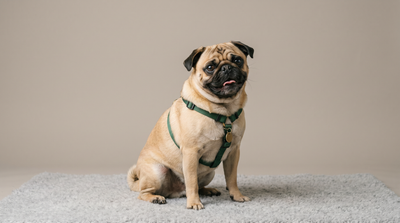
The Pug's silhouette is one of the most recognisable in the dog world compact, square, and solid. Despite their small stature, well-bred Pugs feel surprisingly substantial when you pick them up. Their face is their signature: deeply wrinkled forehead, flat muzzle, large round eyes that seem perpetually full of personality, and a tightly curled tail that sits confidently over a round little bottom.
Male Pugs
Weight: 7 – 9 kg | Height: 28 – 30 cm at the shoulder
Males tend to be slightly stockier and more assertive in temperament. They may display territorial marking behaviour if unneutered.
Female Pugs
Weight: 6 – 8 kg | Height: 25 – 28 cm at the shoulder
Females are slightly smaller and often described as more independent. Unspayed females go into heat roughly every 6 months.
Coat
Short, smooth, and dense with a fine, soft texture that belies just how much they shed. The Pug's double coat sheds year-round, with heavier shedding during seasonal transitions (October–November and March–April in India). Despite the short coat, regular brushing is non-negotiable for Indian households.
Recognised Colours in India
- Fawn — the classic Hutch Pug colour; ranges from pale cream to rich apricot-fawn
- Black — solid, glossy black coat; slightly less common in India
- Silver — a pale, cool-toned fawn variant; less common
- Apricot — a warm orange-toned fawn; sometimes listed separately by breeders
⚠️ Beware of breeders advertising "rare coloured" Pugs (merle, brindle, blue). These are not standard Pug colours and may indicate crossbreeding or unethical practices.
The Pug Face - What to Know
The Pug's flat face (brachycephaly) is caused by a shortened skull. This gives them their endearing expression but compresses the nasal passages, elongates the soft palate, and can narrow the nostrils (stenotic nares). A well-bred Pug should have visibly open nostrils they should look like two distinct holes, not pinched slits. This matters especially for Indian Pug owners, because breathing efficiency directly determines heat tolerance.
Grooming
Pugs are often sold as "low grooming" dogs because of their short coat. This is one of the most persistent myths in Indian pet parenting. In reality, Pugs require daily attention just not in the ways most people expect. The short coat hides a surprising amount of shed hair, and the facial folds are a daily hygiene responsibility that, if neglected, can lead to painful infections.
Brushing - More Than You Think
Pugs shed a lot for a small dog with a short coat. Their fine, dense undercoat releases hair continuously. In an Indian home, this means Pug hair ends up on every surface. Brush your Pug 3–4 times a week with a rubber curry brush or soft-bristle slicker. During shedding season (March–April and October–November), daily brushing is the only way to keep the hair manageable. A deshedding glove works brilliantly for Pugs — they enjoy the massage, and you collect a surprising amount of undercoat with each pass.
Pugs are prone to dull coats, dry flaky skin, and skin-fold inflammation all of which are worsened by India's heat and humidity. Vettofit Wild-Caught Alaskan Salmon Oil delivers EPA and DHA Omega-3 fatty acids that strengthen the skin's natural lipid barrier, reduce inflammatory responses in the folds, and bring visible coat lustre within 4 weeks of daily use. It's a simple addition to your Pug's bowl that makes a measurable difference especially during the dry winter months and post-monsoon when skin issues peak.
Explore Salmon Oil →Wrinkle Cleaning - The Most Important Daily Task
This is non-negotiable for every Pug parent. The skin folds on a Pug's face particularly the deep nose roll above the muzzle, the folds around the eyes, and the chin fold trap moisture, dirt, and bacteria. In India's year-round warmth and monsoon humidity, these folds become hotspots for skin-fold dermatitis (intertrigo) within days of neglect.
Clean every fold once daily. Use a soft damp cloth or unscented cotton pad to gently open each fold, wipe out any debris or discharge, then dry thoroughly. The drying step is the one most pet parents skip and it is the most important. Trapped moisture is the primary cause of fold infections. If you notice redness, a sour smell, or your Pug pawing at their face, consult your vet promptly a fold infection can become quite painful quickly.
Bathing
Bathe your Pug every 3–4 weeks using a gentle dog shampoo formulated for sensitive skin. In India's heat, some Pug parents bathe more frequently which is fine, provided you use a moisturising shampoo that doesn't strip the skin's natural oils. Always clean and dry the facial folds after every bath. Do not let your Pug sit in an air-conditioned room immediately after a bath when still damp the sudden temperature change can cause respiratory distress in brachycephalic dogs.
Eyes - Daily Monitoring
A Pug's large, prominent eyes are one of their most endearing features — and one of their most vulnerable. The eyes can dry out quickly (especially in AC-heavy Indian homes and during dry winters), and they are prone to corneal scratches from the facial folds rubbing against them. Check your Pug's eyes daily. Wipe away any discharge with a damp cotton pad using a separate wipe for each eye. In dusty Indian cities (Delhi, Noida, Ahmedabad), consider a saline eye rinse every 2–3 days. Any cloudiness, squinting, or sudden discharge requires a vet visit do not wait.
Ears, Nails & Teeth
Check ears weekly and clean with a vet-approved ear cleaner if you notice wax build-up or a yeasty smell a common issue in humid Indian climates. Trim nails every 3–4 weeks (Pugs' nails grow quickly). Start dental hygiene early with a finger brush and dog toothpaste Pugs are prone to dental disease due to their compressed jaw structure. Aim for brushing 3–4 times per week minimum.
Training
Training a Pug is a delightful, occasionally maddening experience. The Pug's unofficial training philosophy can be summarised as: "I'll do it but only if I feel like it, and only if there is something in it for me." They are not unintelligent; they are strategically selective. The good news is that Pugs are profoundly food-motivated, which gives you an extremely powerful tool provided you use it wisely without overfeeding.
Starting Right: Puppyhood (8 Weeks – 6 Months)
Begin training the day your Pug puppy comes home. Pugs respond best to short, positive, reward-based sessions 5 to 10 minutes maximum, 2–3 times daily. Their attention span is limited and they overheat quickly, so never train outdoors in warm weather. Keep all sessions indoors, in a cool space, with high-value treats cut into tiny pieces (the size of a pea). Start with the basics: name response, "sit," "stay," and "come." These four commands are your foundation and in India's busy, stimulating environments, a reliable recall is a safety essential.
Pug Training Reality Check
- What Pugs learn quickly: Sit, come (when treats are visible), their name, "biscuit" in any language, the sound of a treat bag opening
- What takes patience: "Stay" (they want to follow you everywhere), "leave it" (food-motivated brains make this hard), loose-leash walking
- What requires professional help: Resource guarding (rare but possible), separation anxiety (very common in Pugs)
- Pug secret weapon: Use the treat as a lure first, then transition to reward-only once the command is learned. Pugs who associate commands purely with treats will refuse to perform without them.
Socialisation - India-Specific Priorities
Socialise your Pug puppy extensively between 8 and 16 weeks this window is critical. Indian environments offer unique socialisation challenges and opportunities. Introduce your Pug gradually to:
- Street sounds: autorickshaws, horns, construction noise, vendor calls
- Street dogs: supervised exposure to calm, vaccinated street dogs teaches appropriate canine communication. Keep a safe distance from unknown strays.
- People: Pugs are naturally sociable, but expose them to varied appearances helmets, sarees, caps, uniforms
- Diwali preparation: Start cracker desensitisation from October. Use a cracker desensitisation audio track (available on YouTube) at very low volume, increasing gradually over weeks. Never take a Pug near fireworks. Create a safe, enclosed "bunker" room with white noise during Diwali night.
- Vet visits: Make early vet visits positive (treats, no procedures) so your Pug associates the clinic with good things not just injections.
Housetraining in Indian Homes
Most Indian Pug parents use a combination of pee pads (indoors) and balcony/terrace access. Pugs can be reliably house trained within 4–8 weeks with consistent scheduling: take them to the designated spot immediately after waking, after every meal, and after play. Use the same phrase every time "potty" works and reward immediately after they go in the right spot. Never scold after the fact; Pugs have short memories for mistakes but long memories for shame, and punishment creates anxiety rather than learning.
Diet & Nutrition
The Pug has an extraordinary relationship with food: enthusiastic, relentless, and entirely without restraint. If you let a Pug self-regulate their food intake, they will eat until there is no food left and then look at you with those enormous eyes to suggest there was never any food to begin with. Obesity is the single biggest preventable health threat for Indian Pugs, and every dietary decision you make should be made with that awareness.
How Much to Feed - By Life Stage
Puppies (8 Weeks – 6 Months)
3–4 small meals per day. Choose a high-quality puppy kibble formulated for small breeds, or a vet-guided home-cooked diet with lean chicken, rice, and vegetables. Total daily quantity: approximately 100–150g dry kibble, or 150–200g cooked food. Consult your vet to confirm individual puppies vary significantly.
Adult Pugs (6 Months – 7 Years)
2 meals per day morning and evening. The exact quantity depends on the food's caloric density, your Pug's activity level, and neutering status (neutered Pugs need fewer calories). As a guide: roughly 1/2 to 3/4 cup of a quality kibble twice daily, or 150–200g cooked food per meal. Weigh your Pug monthly. You should be able to feel their ribs without pressing hard — if you cannot, reduce portions immediately.
Senior Pugs (7+ Years)
Switch to a senior-formula food with reduced calories and added joint support (glucosamine, chondroitin). Some senior Pugs develop a reduced appetite at this stage, a nutrient-dense food topper can help maintain nutritional intake without large meal volumes. Continue 2 meals per day; monitor weight and body condition closely.
Home-Cooked Diet - Indian Context
Many Indian Pug parents feed home-cooked diets often a combination of rice, boiled chicken, and seasonal vegetables. This can work well, but it requires careful nutritional balancing. The most common gaps in home-cooked Indian dog diets are calcium (critical for bone health), Omega-3 fatty acids, and certain B vitamins. If you feed home-cooked, supplement with a vet-recommended daily nutrition supplement to fill these gaps consistently.
Pugs on home-cooked diets often miss out on key micronutrients especially when you're balancing flavour, budget, and a dog who refuses anything new. Vettofit Nutri-Topper is a vet-formulated daily supplement powder that you simply sprinkle over your Pug's existing meal. Formulated with human-grade chicken, turmeric, probiotics, and essential vitamins, it bridges the nutritional gaps in home-cooked diets without disrupting familiar flavours ideal for the notoriously opinionated Pug palate.
Explore Nutri-Topper →Indian Foods That Are Safe vs Dangerous for Pugs
✅ Safe Indian Foods (in moderation)
- Plain rice and roti (without salt/spices): Digestible carbohydrate fine occasionally
- Boiled chicken breast: Excellent lean protein, Pugs love it
- Curd (plain, unsweetened): Good probiotic source give 1–2 tbsp, not a bowlful
- Boiled eggs: Excellent protein and biotin source
- Banana: Good occasional treat high in potassium
- Boiled carrot, sweet potato: Great low-calorie treats for weight management
- Watermelon (seedless): Excellent hydration treat for Indian summers
- Onion and garlic: Toxic to dogs — cause haemolytic anaemia. Present in most Indian cooking. Never share dal, sabzi, curry, or biryani. Even small amounts cause red blood cell damage.
- Grapes and raisins: Can cause acute kidney failure in dogs. Keep dry fruits off the table especially during Diwali mithai season.
- Milk in large quantities: Many adult dogs are lactose-intolerant. Curd (fermented) is fine in small amounts; a bowl of milk is not.
- Tea and coffee: Caffeine is toxic to dogs. "But my dog loves chai" they love the milk. The chai itself can cause heart arrhythmia.
- Chocolate: Severely toxic - even small amounts can be fatal for a Pug-sized dog. Keep festive gifts out of reach.
- Salty snacks: Namkeen, chips, bhujia excess sodium causes dehydration and can lead to sodium toxicity. A dog who just ate salted namkeen needs water urgently.
Managing Pug Weight - The Most Important Diet Rule
An overweight Pug is a Pug in serious danger. Excess weight compresses the chest, worsens breathing difficulties, strains joints, and significantly shortens lifespan. Do not measure treats casually a treat for a 7kg Pug should be the size of a pea. Eliminate all table scraps from family members, including the well-meaning uncle who "just gives a little biscuit." Use a measuring cup for meals. Weigh your Pug monthly. A healthy adult Pug should have a clearly visible waist when viewed from above.
Health & Common Issues
Pugs are charming companions with real health vulnerabilities that every Indian Pug parent must understand. The breed's physical structure especially the flat face and compact body means several health conditions are not random accidents but structural realities that require proactive management. This is not a reason to avoid the breed; it is a reason to go in with eyes fully open.
Brachycephalic Obstructive Airway Syndrome (BOAS)
BOAS is the term for the constellation of airway abnormalities that brachycephalic (flat-faced) dogs like Pugs, French Bulldogs, and Bulldogs can develop. In Pugs, this typically includes stenotic nares (pinched nostrils), an elongated soft palate (tissue that partially blocks the airway), and in severe cases, everted laryngeal saccules. Signs of moderate-to-severe BOAS include: loud constant snoring at rest, open-mouth breathing when calm, blue-tinged gums (emergency seek a vet immediately), gagging or regurgitation, and exercise intolerance.
Many cases of BOAS can be surgically corrected widening of the nostrils and trimming of the soft palate are outpatient procedures that dramatically improve a Pug's quality of life and heat tolerance. If your Pug regularly seems to be working hard to breathe, a veterinary assessment for BOAS is strongly recommended before Indian summer arrives.
Signs of heatstroke: Heavy/laboured panting, drooling excessively, bright red gums, stumbling or collapse, vomiting, blue-tinged lips or tongue.
Emergency response: Move your Pug to a cool indoor space immediately. Place cool (not cold - cold water causes shock) wet towels on the neck, armpits, and groin. Offer small sips of water. Rush to the nearest vet heatstroke is fatal without treatment. Do not use ice water; do not place in a tub of cold water.
Eye Conditions
The Pug's prominent eyes are among the most exposed of any dog breed, making them vulnerable to corneal ulcers, pigmentary keratitis (dark pigment spreading over the cornea), dry eye (keratoconjunctivitis sicca), and the alarming condition of proptosis (eye popping out of socket) if the dog is grabbed too roughly around the head. Monitor your Pug's eyes daily. In dusty Indian cities, foreign bodies in the eye are common learn to flush the eye safely with saline. Any cloudiness, squinting, or eye colour change needs a vet visit the same day.
Skin-Fold Dermatitis (Intertrigo)
As discussed in the grooming section, fold infections are a chronic management issue for Indian Pugs given our climate. In severe or recurring cases, surgical correction of the nose fold is the most humane long-term solution. Do not rely purely on topical treatments for chronically infected folds address the structural cause.
Pug Dog Encephalitis (PDE)
PDE is a devastating, breed-specific neurological disease that affects Pugs exclusively. It causes severe brain inflammation, typically presenting in young to middle-aged Pugs as seizures, disorientation, blindness, and coma. PDE is believed to have a genetic component and is not preventable with current knowledge. Awareness is important any Pug showing seizures or sudden behavioural change should be evaluated immediately. While PDE itself is rare, seizures in Pugs warrant urgent veterinary attention regardless of cause.
Hip Dysplasia & Hemi-Vertebrae
Pugs are prone to hip dysplasia (malformation of the hip joint) and hemivertebrae abnormally shaped vertebrae in the spine that can cause a characteristic "screw tail" but can also affect spinal cord integrity. Signs include hind-limb weakness, unusual gait, and difficulty rising. Keep your Pug lean to reduce joint load, and provide orthopedic bedding. Have your Pug's spine and hips assessed if you notice any gait abnormalities.
India-Specific Health Priorities
Preventive Care Schedule for Indian Pugs
- Tick & flea prevention: Year-round. Tick-borne diseases (ehrlichiosis, babesiosis) are present in every major Indian city. Use a vet-recommended tick preventive consistently monthly spot-on or tick collar. Check for ticks after every outdoor outing.
- Deworming: Every 3 months for adult Pugs. More frequently for puppies (every 2–4 weeks until 6 months).
- Core vaccinations: DA2PP (distemper, adenovirus, parvovirus, parainfluenza) annually or triennial after booster protocol. Rabies annually. Leptospirosis annually especially important in monsoon-heavy cities like Mumbai, Chennai, and Kolkata.
- Dental checkup: Every 6 months Pugs have compressed jaws leading to tooth crowding and accelerated tartar build-up.
- Annual bloodwork: From age 5 onwards. Pugs can develop kidney and liver issues; early detection makes treatment far more effective.
- BOAS assessment: Every 12 months with your vet, especially if the dog seems to struggle in warm weather.
Exercise
Exercise with a Pug in India requires more thought than exercise with almost any other breed. Their airway anatomy, combined with India's heat, means that the standard "30 minutes twice a day" advice that works for a Labrador can be genuinely dangerous for a Pug on a May afternoon. But let's be clear: Pugs do need exercise regular movement is essential for weight management, joint health, and mental wellbeing. The key is how and when.
Daily Exercise Requirements by Age
Puppies (Up to 6 Months)
The "5 minutes per month of age" rule applies: a 3-month-old Pug puppy needs about 15 minutes of outdoor/active exercise twice daily. Puppies should not be pushed beyond this their joints are still developing. Indoor play (short fetch games, gentle tug) supplements formal walks. Always in a cool environment.
Adult Pugs (6 Months – 7 Years)
Two short walks per day: 15–20 minutes each, in a comfortable climate. Monitor your Pug constantly during walks if they start slowing down, panting heavily, or lagging behind, the walk ends immediately. This is not stubbornness; it is physiology.
Senior Pugs (7+ Years)
Two gentle 10–15 minute walks. Focus on mental stimulation (sniff walks let them stop and sniff everything they want to) rather than distance. Older Pugs also tire more easily and may be dealing with arthritis; adapt pace to their comfort level.
Summer Protocol - March to June
This is the period of highest risk for Indian Pugs. Follow these rules without exception during summer months:
- Walk timing: Before 7 AM and after 6:30 PM only. The ground temperature peaks between 11 AM and 4 PM and can blister paws and cause heatstroke simultaneously.
- Pavement test: Press the back of your hand on the pavement for 7 seconds. If you cannot hold it there, it is too hot for your Pug's paws.
- Walk duration: Reduce to 10 minutes maximum in temperatures above 28°C. Shorten further if your Pug is overweight or has breathing difficulties.
- Hydration: Carry water for every walk. Bring a collapsible bowl. Offer water every 5–10 minutes during summer walks.
- Cooling vest: A wetting cooling vest or a damp cloth around the neck significantly helps Pugs manage summer walks. Get your Pug comfortable wearing one from puppyhood.
- AC at home: During peak summer (April–June in most Indian cities), your Pug's indoor environment should be maintained at or below 26°C. This is not a comfort preference it is a health requirement for the breed.
Monsoon Exercise - July to September
Monsoon walks carry two risks for Pugs: leptospirosis exposure (from puddles and flooded areas) and slipping on wet tiles or marble floors (which are ubiquitous in Indian homes). During heavy rain periods, switch to indoor exercise: indoor fetch with a soft ball, stair climbing (2–3 gentle trips up and down), or puzzle feeders that make your Pug work mentally for their meals.
Indoor Enrichment
Pugs are surprisingly good indoor dogs when provided with mental stimulation. Snuffle mats (scatter kibble in a mat of fabric strips), food puzzle toys, and short training sessions engage a Pug's mind beautifully. A mentally tired Pug is a well-behaved Pug and mental exercise doesn't carry the heatstroke risk that outdoor walks do in Indian summers.
Living With a Pug in India
Pugs were bred for one purpose: human companionship. They excel at it. A Pug will follow you from room to room, sit at your feet while you work, and insert themselves into every activity with cheerful determination. Understanding this about the breed is essential it tells you not just what they are good at, but what they need to be happy.
Apartment Living
Pugs are among the best apartment dogs in India. They require minimal space, adapt well to flat living, and their exercise needs are easily managed in a 2BHK or 3BHK. Considerations for apartment Pug parents:
- Lift access: Pugs should not climb more than 2–3 floors of stairs regularly it stresses the airway and joints. Elevator access in your building is important for daily walks.
- Balcony safety: Pugs are curious and can squeeze through surprisingly small gaps. Ensure balcony railings are Pug-proofed with mesh or grille additions.
- Flooring: Indian homes with marble and polished tile floors are slippery for Pugs, who can develop hip problems from repeated slipping. Non-slip mats in high-traffic areas (kitchen, living room) protect joints significantly.
- AC access: Ensure your Pug has access to a cooled room year-round, especially during summer. A Pug in a non-AC environment in Indian summer is a welfare concern.
With Children
Pugs and children are a wonderful match in most contexts. Pugs are patient, good-natured, and enjoy the company and stimulation of active children. The caution: young children must be taught never to squeeze or grab a Pug around the head or neck the eyes can proptose (pop out) under forceful pressure. This is not to alarm parents, but to ensure adult supervision during rough play. A Pug who is tired or unwell will usually walk away rather than snap respect their signals.
With Other Pets
Pugs generally get along well with other dogs and cats, especially when raised together. They are not dominant or territorial by nature. The concern in multi-pet households is Pug safety during rougher play a larger, more boisterous dog playing with a Pug should be supervised, as the Pug cannot manage the pace and can be accidentally injured. When introducing a Pug to cats, the Pug will almost certainly want to play; the cat will decide the terms.
Cost of Pug Ownership in India
Typical Monthly Costs (INR)
- Food (quality kibble or home-cooked): ₹1,500 – ₹3,500/month
- Supplements & health products: ₹500 – ₹1,200/month
- Vet visits (routine): ₹500 – ₹1,500/month averaged
- Grooming (if professional): ₹500 – ₹800/month
- Tick prevention & deworming: ₹300 – ₹600/month
- Pet insurance (recommended for Pugs): ₹1,000 – ₹2,500/month
- Approximate total (routine): ₹4,500 – ₹10,000/month
⚠️ Note: BOAS surgery (if required) typically costs ₹20,000–₹60,000 in major Indian cities. Pet insurance that covers hereditary conditions is strongly recommended for Pugs.
Breed Availability & Ethical Sourcing in India
Pugs are widely available from breeders across India, but the breed has suffered significantly from overbreeding in the wake of the Vodafone ad's cultural impact. Many Indian Pug breeders have prioritised quantity and coat colour over health producing dogs with more extreme brachycephaly, chronic health issues, and shorter lifespans than well-bred Pugs. Before purchasing from a breeder, ask to see both parents, request health clearances, and listen to how the parents breathe. Alternatively and our vets at Vettofit would always mention this there are dedicated Pug rescue groups across India (in Bengaluru, Mumbai, Delhi, and Hyderabad) with wonderful adult Pugs available for adoption. Adopting a rescue Pug often means taking in a dog whose health history is already known.
Breed History & Origin
The Pug is one of the oldest dog breeds in existence, with a history stretching back at least 2,000 years to ancient China. The Chinese imperial court treasured flat-faced dogs including ancestors of today's Pug, Shih Tzu, and Pekingese as companions of the highest social status. These dogs were called "Lo-Sze" and were kept exclusively by royalty, guarded by soldiers, and gifted to foreign dignitaries as marks of imperial favour. They lived lives of absolute comfort and privilege a tradition that modern Pugs appear to consider their birthright.
The Pug's journey to Europe began through Dutch trade routes in the 16th century. Dutch merchants brought Pugs from Asia, and the breed quickly captured European royal hearts. The Pug became the official dog of the House of Orange in the Netherlands reportedly when a Pug named Pompey saved Prince William the Silent from assassination by barking to alert him of approaching Spanish soldiers. From the Netherlands, the breed spread to England, France, and beyond, becoming a fixture of 18th-century European aristocracy.
The modern Pug breed as we know it was largely shaped in Victorian England, where the breed was standardised and the distinctive fawn-with-black-mask colouring was established. The Kennel Club (UK) recognised the Pug formally in the 19th century, cementing the breed's standards. In India, the Kennel Club of India (KCI) recognises the Pug under the Toy Group. The breed's arrival in modern India as a popular pet coincided precisely with that 2003 Hutch advertisement which remains, arguably, the most effective single piece of pet marketing in Indian history.
Frequently Asked Questions
Can Pugs survive in India's summer without air conditioning?
This is one of the most important questions a Pug parent in India can ask. The honest answer: no, not comfortably and in peak summer (April–June), attempting to keep a Pug in a non-air-conditioned environment in most Indian cities is a serious welfare and health risk. Pugs cannot pant efficiently due to their compressed airways, which means they cannot self-regulate their body temperature the way most dogs can. A Pug in an enclosed, unventilated space above 30°C can develop heatstroke rapidly. At minimum, ensure your Pug has access to a cooled room during summer months, particularly between 10 AM and 5 PM.
How do I clean my Pug's facial wrinkles and how often?
Clean every facial fold once daily using a soft damp cotton pad or cloth. Gently open each fold the nose roll above the muzzle, the folds around the eyes, and the chin fold wipe away any debris or discharge, and then dry each fold thoroughly with a clean dry cotton pad. The drying step is more important than the cleaning step: trapped moisture causes yeast and bacterial infections within 24–48 hours in India's humidity. During monsoon months (June–September), clean twice daily. If you notice redness, a sour or musty smell, or your Pug rubbing at their face, consult your vet fold infections are painful and escalate quickly.
Are Pugs good for first-time dog owners in India?
Pugs can be wonderful for first-time owners who are prepared for the breed's specific needs. Their small size, apartment-friendly nature, and deeply loving temperament are genuine advantages. However, first-time Pug owners must be willing to commit to: daily wrinkle and eye cleaning, strict portion control (no table scraps), summer heat management (AC access is essential), and regular vet check-ups for breed-specific conditions. Pugs are not a low-maintenance breed despite their small size they are a high-involvement breed in a compact, charming package. Go in informed, and the experience is immensely rewarding.
Why does my Pug snore and breathe loudly — should I be worried?
Some snoring and breathing sounds in Pugs are expected due to their flat-faced anatomy. The concern is whether the breathing sounds represent normal Pug anatomy or a medically significant obstruction. Signs that warrant a vet assessment: loud snoring even when fully relaxed and cool, open-mouth breathing when calm (not after exercise), blue or pale gums at any time, gagging or retching sounds, and exercise intolerance (stopping after very short walks). These signs suggest Brachycephalic Obstructive Airway Syndrome (BOAS), which is surgically correctable. If you are unsure, have your vet assess — many Pugs in India benefit significantly from early BOAS intervention.
How do I manage my Pug's weight when the whole family keeps feeding them?
This is one of the most common Pug health challenges in Indian joint family households, where multiple family members offer treats with love and generosity. The most effective solution is a designated single feeder system: one person prepares and serves every meal, and the daily treat allowance (small, pea-sized pieces of safe treats) is portioned out in the morning and visible to everyone. When treats are finished, vegetable pieces (carrot, cucumber) replace them. Post a note near the kitchen or dining area explaining why food restrictions are essential for the Pug's health most family members respond well to understanding the medical reason.
What are the most important health checks for a Pug I'm adopting or buying in India?
Before adopting or purchasing a Pug in India, insist on the following: ask to see both parents, if possible, and observe their breathing they should breathe quietly at rest. Check the puppy's nostrils they should be visibly open, not pinched shut. Listen for wheezing or laboured breathing at rest. Ensure the puppy has received age-appropriate vaccinations and deworming. Request KCI registration papers if buying from a breeder. Have an independent vet assess the puppy before completing the purchase or adoption. A good breeder or rescue will welcome this. Consider also scheduling a BOAS screening with your vet within the first month of bringing your Pug home.
This article is for informational purposes only and does not substitute professional veterinary advice. Please consult your vet before making changes to your pet's diet or health routine. Content reviewed by the Vettofit veterinary advisory team, May 2026.