
On this page
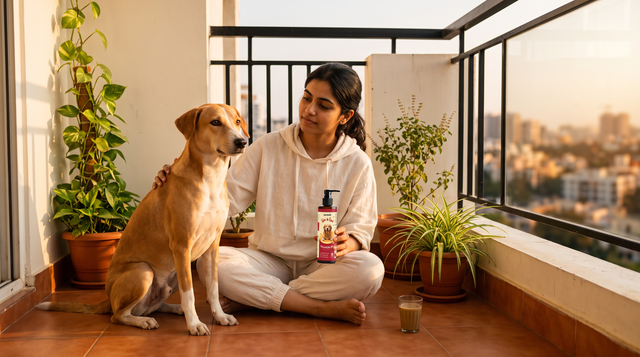
Ritu noticed it on a Monday morning. Her two-year-old Indie, Biscuit, had scratched a raw pink patch behind his left ear. The hair around it was gone. He had been licking his paws for weeks, but she thought it was just a habit. That morning in her Bengaluru apartment, standing over a trail of shed fur on the sofa, she opened Amazon and typed the only thing she could think of: best supplement for dog itching and scratching.
Hundreds of products showed up. Fish oil, salmon oil, omega tablets, skin sprays, coat syrups. Every one claimed to be the answer. None explained why her dog was itching in the first place, or how a supplement could actually help.
This guide does both. It breaks down the science behind dog skin itch, names the specific nutrients that support skin repair, and shows you how to pick the right supplement for your dog in India.
The best supplement for dog itching and scratching contains omega-3 fatty acids (EPA and DHA), ideally from wild-caught salmon oil or fish oil. Omega-3s support the skin barrier, help manage the body's inflammatory response, and reduce dryness that triggers scratching. Look for vet-approved formulas with third-party testing. Results vary by dog, but most pet parents report visible changes over 3 to 6 weeks of daily use.
Why dogs itch and scratch so much in India
India's hot, humid climate creates a perfect storm for dog skin problems. High moisture levels encourage yeast and bacterial growth on the skin. Seasonal changes, dust, pollen, and flea or tick exposure add to the load. Dogs fed primarily home-cooked meals often miss key fatty acids that keep the skin barrier strong.
Itching is not a disease. It is a signal. Your dog's skin is telling you that something has disrupted its natural defence layer. That layer is made of oils, proteins, and fatty acids. When any one of those drops too low, the skin dries out, cracks, or overproduces oil. Both extremes trigger scratching.
Here is what makes India specific:
- Humidity and heat. Mumbai monsoons, Bengaluru rains, Delhi summers. Moisture sits on the skin and feeds yeast. Dogs scratch, lick, and chew their paws.
- Home-cooked diets. Rice, roti, dal, chicken curry. These meals fill your dog's stomach but leave gaps in omega-3 fatty acids, zinc, and biotin.
- Indie dogs and mixed breeds. Indies are hardy, but many adopted strays carry a history of malnutrition. Their skin needs extra support to rebuild.
- Fleas and ticks. Year-round in most Indian cities. Even one flea bite can trigger allergic dermatitis in sensitive dogs.
VET TIP
If your dog scratches the same spot until it bleeds, or if the skin turns dark, thickened, or smells bad, see your veterinarian before starting any supplement. These signs may point to a skin infection that needs medical care first.
The role of the skin barrier
Think of your dog's skin like a brick wall. The skin cells are bricks. The oils between them are mortar. When the mortar weakens, allergens, bacteria, and moisture get in. That triggers an immune response, and itching follows.
Supplements work on the mortar. They supply the raw materials, mainly fatty acids and specific vitamins, that your dog's body uses to rebuild and maintain that protective layer. They do not replace veterinary treatment for infections or severe allergies. They support the skin's own repair process.
5 nutrients that support itchy dog skin
Not all supplements are built the same. The nutrients below have published veterinary research behind them. Each one plays a different role in skin health.
| Nutrient | What it does for skin | Best source |
|---|---|---|
| EPA (omega-3) | Supports the body's natural anti-inflammatory response, may help reduce redness and itch frequency | Wild-caught salmon oil, fish oil |
| DHA (omega-3) | Supports skin cell membrane structure and coat texture | Salmon oil, marine sources |
| Zinc | Helps maintain skin cell turnover; zinc deficiency is linked to crusty, flaky skin in dogs | Meat-based supplements, fortified formulas |
| Biotin (Vitamin B7) | Supports keratin production, which makes up fur and the outer skin layer | Organ meats, egg yolks, supplements |
| Vitamin E | Antioxidant that helps protect skin cells from oxidative damage | Salmon oil (naturally present), supplements |
Why omega-3 matters most for itching
A 2011 study published in Veterinary Dermatology found that dogs with atopic dermatitis who received omega-3 fatty acid supplementation showed a measurable reduction in pruritus (itch) scores compared to control groups. The effect was not instant. It built over several weeks as the fatty acids integrated into skin cell membranes.
EPA, one of the two main omega-3s in fish oil, is the key player here. It competes with arachidonic acid (an omega-6) for space in cell membranes. When EPA levels rise, the body produces fewer pro-inflammatory compounds. The result: less redness, less itch, less scratching.
This is why veterinary dermatologists often suggest omega-3 supplementation alongside other treatments for dogs with seasonal skin issues. The supplement does not replace medication when needed, but it supports the skin from the inside.
The omega-3 to omega-6 ratio
Most Indian dog diets are heavy on omega-6 (from vegetable oils, rice bran, chicken fat) and very low on omega-3. The National Research Council (NRC) guidelines for dogs suggest both fatty acids are needed, but the ratio matters. Too much omega-6 without enough omega-3 can push the body toward more inflammation.
A fish oil or salmon oil supplement shifts that ratio back toward balance. It does not eliminate omega-6. It adds the omega-3 that home-cooked Indian meals and many commercial kibbles lack.
How to choose the right skin supplement for your dog
Walk into any pet store or scroll through Amazon India, and you will find dozens of dog skin supplements. Here is how to filter through them.
Look for these 6 things on the label
- EPA and DHA amounts listed separately. A label that says only "omega-3" without listing EPA and DHA milligrams is hiding something. You need to know how much of each fatty acid your dog is getting per dose.
- Source of omega-3. Wild-caught fish oil or salmon oil is the gold standard. Flaxseed oil provides ALA, which dogs convert very poorly into EPA and DHA.
- Vet-approved. A qualified veterinarian has reviewed the formula. This is not the same as "vet recommended," which requires recommendation evidence.
- Third-party tested. An independent lab has verified purity, potency, or heavy metal levels. This matters because fish-based supplements can carry mercury or other contaminants if not tested.
- No artificial colours, flavours, or fillers. Your dog's skin is already irritated. The last thing it needs is more synthetic additives.
- Clear dosage guidance by body weight. A 5 kg Shih Tzu and a 35 kg Labrador do not need the same dose. Good products make this clear.
QUICK CHECK
Flip the bottle or pouch over. If you cannot find specific EPA/DHA milligrams per serving, move on. A supplement that does not show its numbers is not worth your trust or your money.
Liquid oil vs. tablets vs. chews
Format matters more than most people think. Here is why:
- Liquid oil (pump bottle): Highest bioavailability. Mixes directly into food. Easier to adjust dose for different body weights. Most dogs accept it without fuss.
- Soft chews: Convenient but often contain fillers, binders, and flavouring agents. Check the inactive ingredient list carefully.
- Capsules or tablets: Harder for some dogs to swallow. You may need to puncture the capsule and squeeze the oil onto food anyway.
For itchy skin specifically, liquid salmon oil or fish oil tends to deliver the fastest, most consistent results because your dog absorbs the fatty acids directly with their meal.
Dog skin supplement types compared
This table helps you compare the most common supplement types sold in India for dog itching and coat health.
| Supplement type | Key nutrients | Best for | Watch out for |
|---|---|---|---|
| Salmon oil (liquid) | EPA, DHA, omega-3, vitamin E | Itching, dry skin, dull coat, shedding | Must be wild-caught; farmed salmon may have lower omega-3 |
| Fish oil capsules | EPA, DHA, omega-3 | General skin and coat support | Dose is fixed per capsule; harder to adjust |
| Flaxseed oil | ALA (omega-3 plant form) | Vegetarian option for coat shine | Dogs convert less than 5% of ALA into EPA; limited itch benefit |
| Coconut oil | Medium-chain triglycerides | Topical moisture for dry patches | Not an omega-3 source; does not address internal inflammation |
| Biotin tablets | Vitamin B7 | Coat growth and texture | Alone, will not reduce itch caused by omega-3 deficiency |
| Multivitamin chews | Varies widely | General health gaps | Often too little EPA/DHA per chew to impact skin health |
The research consistently points in one direction: for itching and scratching specifically, omega-3 fatty acids from marine sources (fish oil, salmon oil) have the strongest evidence. Other nutrients play supporting roles, but omega-3 does the heavy lifting for skin barrier repair.
How long before you see results
Most pet parents notice visible changes in coat texture and reduced scratching within 3 to 6 weeks of daily omega-3 supplementation. Some dogs show improvement sooner, some take longer. Results depend on the severity of the skin issue, your dog's diet, breed, and overall health. Consistency matters more than dose size.
Omega-3 fatty acids do not work like a topical spray. They do not sit on the surface. They integrate into skin cell membranes over time, gradually shifting the balance of fatty acids in your dog's body. That process takes weeks, not days.
Here is a rough timeline based on what veterinary dermatologists and pet parents commonly report:
| Week | What you might notice |
|---|---|
| Week 1-2 | Coat may feel slightly softer. No major itch change yet. |
| Week 3-4 | Reduced dryness. Some dogs scratch less frequently. Coat may look shinier. |
| Week 5-6 | Visible improvement in coat texture and density. Itching episodes may reduce. |
| Week 8+ | Full integration of fatty acids into skin. Best results with continued daily use. |
If your dog shows no improvement after 6 to 8 weeks of consistent daily supplementation, consult your veterinarian. The itching may have an underlying cause, like a food allergy or a skin infection, that needs direct treatment.
3 mistakes pet parents make with dog skin supplements
1. Stopping too early
The most common mistake. A pet parent starts salmon oil, sees no change in 10 days, and switches to something else. Omega-3s need time to build up in the body. Stopping at two weeks means the fatty acids never reach the levels needed to make a difference.
2. Choosing the wrong type of omega-3
Flaxseed oil is popular because it is plant-based and affordable. But dogs convert very little ALA (the omega-3 in flaxseed) into EPA and DHA. For itching and skin repair, your dog needs preformed EPA and DHA from marine sources. Salmon oil and fish oil provide these directly.
3. Ignoring the rest of the diet
A supplement fills gaps. It does not fix a fundamentally unbalanced diet. If your dog eats only rice and boiled chicken every day, adding a pump of salmon oil helps, but the diet itself still needs variety. Talk to your vet about balancing your dog's home-cooked meals.
Itching and scratching can have many causes: allergies, infections, parasites, hormonal conditions, or nutritional deficiencies. A supplement supports skin health, but it does not treat, cure, or diagnose any disease. If your dog's itching is severe, worsening, or accompanied by hair loss, open sores, or a bad smell, please consult your veterinarian. This article is educational, not a diagnosis.
A vet-backed approach to skin and coat care
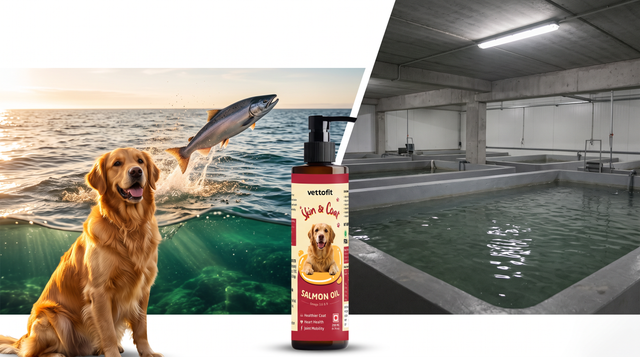
Vettofit Wild-Caught Alaskan Salmon Oil is formulated with EPA, DHA, and naturally occurring vitamin E from wild-caught Alaskan salmon. It is vet-approved, third-party tested, and made in India. The pump-bottle format makes it easy to dose by body weight and mix directly into your dog's meal, whether that is kibble, home-cooked food, or raw. You can see the full ingredient and testing details here.
#CareWithVettofit
Healthier skin starts from the inside
Wild-caught Alaskan salmon oil. Vet-approved. Third-party tested. Made in India.
EXPLORE SALMON OILFrequently asked questions
What is the best supplement for dog itching and scratching?
Omega-3 fatty acid supplements, specifically those containing EPA and DHA from fish oil or wild-caught salmon oil, have the strongest veterinary research behind them for reducing itch and supporting skin health in dogs. Look for vet-approved, third-party tested products with clear dosage instructions.
Can I give salmon oil to my dog every day?
Yes, salmon oil is designed for daily use. Follow the dosage instructions on the product label based on your dog's body weight. Daily consistency is what allows omega-3 fatty acids to build up in the skin cell membranes and produce visible results over 3 to 6 weeks.
Is fish oil or salmon oil better for dogs with itchy skin?
Both provide EPA and DHA. Salmon oil, especially from wild-caught Alaskan sources, tends to have a naturally balanced omega-3 profile and is often better tolerated by dogs. It also contains naturally occurring vitamin E, which acts as an antioxidant. The key is to check the EPA and DHA content per dose, regardless of the source.
How much salmon oil should I give my dog daily?
Dosage depends on your dog's body weight and the specific product. Always follow the label instructions. Typical liquid salmon oil products use pump-based dosing: smaller dogs (under 10 kg) may need 1-2 pumps, while larger dogs (30 kg+) may need 4-5 pumps daily. Consult your veterinarian if your dog is on medication or has a health condition.
Does coconut oil help with dog itching?
Coconut oil can provide temporary surface moisture when applied topically. But it is not an omega-3 source and does not address the internal fatty acid deficiency that causes most chronic itching. For sustained itch relief, dogs need EPA and DHA from marine-based oils like salmon oil or fish oil.
Can puppies take omega-3 skin supplements?
Many salmon oil supplements are safe for puppies, but always check the product label for age-specific guidance and consult your vet first. Puppies have different nutritional needs, and the dosage must be adjusted for their smaller body weight. Start with the lowest recommended dose.
My dog is on allergy medication. Can I still give a skin supplement?
Omega-3 supplements are generally considered safe alongside allergy medications, but always check with your veterinarian first. Your vet can confirm there are no interactions with your dog's specific medication and adjust the supplement dose if needed.
Which dog breeds in India are most prone to itching?
Labradors, Golden Retrievers, German Shepherds, Shih Tzus, and Pugs are among the breeds most commonly seen with skin allergies and itching in Indian veterinary clinics. Indies and mixed breeds can also develop skin issues, especially if they have a history of poor nutrition or flea exposure. Any breed living in a hot, humid Indian climate is at higher risk.
Last updated: September 2026