
On this page
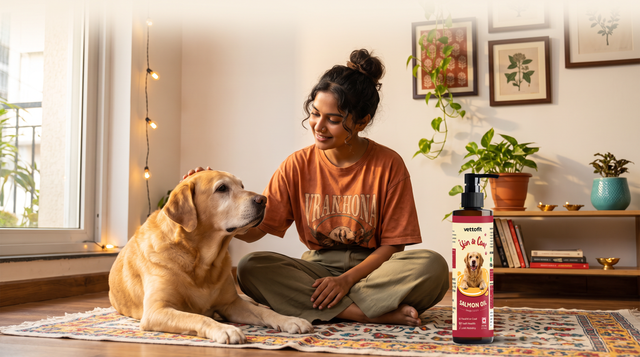
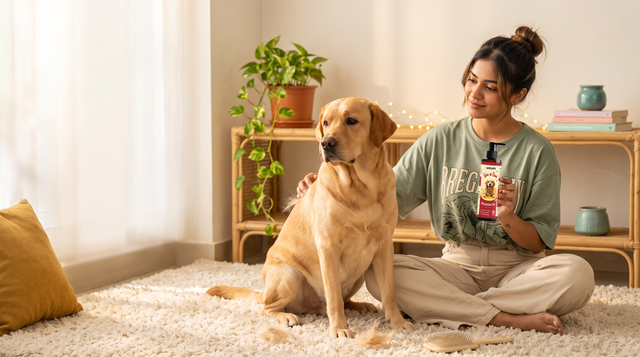
Riya pulled a clump of golden fur off her sofa cushion and stared at it. Her Labrador, Bruno, had been shedding like this for weeks. The floor, the bedsheets, her work clothes. She had tried coconut oil, a new shampoo, and two different "coat health" powders from Amazon. Nothing changed.
If you have been sweeping dog hair off your tiles every single day, you already know the frustration. But here is the part most pet parents miss: shedding is a signal, not just a mess. And the right supplement to reduce dog hair fall can make a real difference, once you understand what your dog's coat is actually asking for.
Dogs shed due to poor nutrition, seasonal coat cycles, dry skin, allergies, or stress. A supplement to reduce dog hair fall should contain omega-3 fatty acids like EPA and DHA from wild-caught salmon oil. These support the skin barrier, reduce inflammation, and promote stronger hair follicles. Most dogs show visible coat improvement within 3 to 6 weeks of daily use. Results vary by breed and health status.
Why is your dog shedding so much?
Shedding is normal. Every dog loses old or damaged hair. Breeds like Labradors, Golden Retrievers, German Shepherds, and Huskies shed heavily because they carry double coats. Even Indian Indie dogs go through seasonal coat changes twice a year.
But when the shedding does not stop, or when you notice bald patches, flaky skin, or a dull coat, something deeper is going on. The hair your dog loses is a reflection of what is happening beneath the skin.
The skin is your dog's largest organ. It uses roughly 30% of daily protein intake just to maintain itself. When nutrition falls short, the coat suffers first, because the body redirects nutrients to vital organs like the heart, liver, and kidneys.
Vet tip
If your dog sheds evenly across the body, it is likely nutritional or seasonal. If the hair loss is patchy, localised, or paired with redness and scratching, visit your vet. That pattern suggests a medical cause like fungal infection, mange, or allergies.
7 causes of dog hair fall in India
Not every cause of dog hair fall needs a supplement. Some need a vet. Some need a diet change. Here is how to tell the difference.
1. Nutritional gaps in home-cooked food
Most Indian dogs eat home-cooked meals: rice, roti, dal, curd, chicken. These diets are filling but often lack omega-3 fatty acids, zinc, biotin, and vitamin E. These are the nutrients your dog's skin and coat need most. Without them, the coat dries out and sheds faster.
2. Seasonal shedding
Dogs blow their coat twice a year, usually before summer and before winter. In Indian cities like Bengaluru, Mumbai, and Delhi, the monsoon humidity can extend this cycle. You will see clumps of undercoat for 2 to 4 weeks. This is normal. A fish oil for dogs supplement can reduce the volume but will not stop seasonal shedding entirely.
3. Dry skin and dandruff
Dog dandruff shows up as white flakes near the base of the fur. Air conditioning, winter dryness, or frequent bathing strips natural oils from the skin. When the skin gets dry, hair follicles weaken. The result: more dog shedding, more dog itchy skin, and a coat that looks rough.
4. Allergies (food or environmental)
Food allergies to wheat, soy, or certain proteins cause dog skin infections, redness, and hair loss. Environmental allergens like dust mites, pollen, and mould are common in Indian apartments. If your dog scratches constantly and the hair fall follows the scratching, allergies are a strong possibility.
5. Stress and anxiety
Dogs shed more when stressed. A new home, a new baby, loud firecrackers during Diwali, long hours alone. Cortisol (the stress hormone) disrupts the hair growth cycle. You might notice your dog leaving tufts of fur on the car seat or at the vet's clinic.
6. Parasites: fleas and ticks
Flea allergy dermatitis is one of the most common causes of dog hair fall in India, especially during monsoon. Even a single flea bite can trigger intense itching in a sensitive dog. Tick infestations also cause localised hair loss around the bite area.
7. Underlying health conditions
Thyroid problems (hypothyroidism), Cushing's disease, and hormonal imbalances can cause chronic dog hair fall. If the shedding comes with weight gain, lethargy, or skin darkening, your vet needs to run blood work.
| Cause | Key sign | Action |
|---|---|---|
| Nutritional gap | Dull, dry coat all over | Add omega-3 supplement to diet |
| Seasonal shedding | Heavy shedding for 2 to 4 weeks | Brush daily, support with omega-3 |
| Dry skin / dandruff | White flakes, rough coat | Reduce bathing, add salmon oil for dogs |
| Allergies | Itching + redness + hair loss | Consult vet for allergy testing |
| Stress | Sudden shedding during change | Reduce stressors, maintain routine |
| Fleas / ticks | Scratching, localised bald spots | Anti-parasitic treatment from vet |
| Medical condition | Patchy loss, weight change, lethargy | Vet blood work needed |
How omega-3 fatty acids reduce dog shedding
Omega-3 fatty acids, specifically EPA (eicosapentaenoic acid) and DHA (docosahexaenoic acid), reduce inflammation in the skin, strengthen the lipid barrier that holds moisture, and support healthier hair follicle cycles. This means less breakage, less shedding, and a shinier coat over time.
Your dog's skin works like a wall. Each cell is a brick. The fats between those cells act as mortar. When your dog does not get enough omega-3, the mortar breaks down. Moisture escapes. Irritants get in. The skin gets inflamed, and hair falls out.
EPA and DHA from salmon oil repair that mortar. They get absorbed into skin cell membranes and do three things at once:
- Reduce inflammation. EPA blocks the production of pro-inflammatory compounds in the skin. Less inflammation means less scratching, less damage, and less dog hair fall.
- Strengthen the skin barrier. DHA helps maintain the lipid layer between skin cells. A stronger barrier holds in moisture and keeps allergens out.
- Support the hair growth cycle. Omega-3 fatty acids nourish hair follicles during the active growth phase (anagen). Stronger follicles hold hair longer before shedding.
A 2020 study published in Veterinary Dermatology found that dogs supplemented with omega-3 fatty acids showed measurable improvement in coat quality and reduced pruritus (itchiness) within 8 weeks. The National Research Council (NRC) recognises EPA and DHA as beneficial for canine skin and coat health.
Why salmon oil, not just any fish oil?
Not all omega-3 sources are equal for dogs. Here is the difference:
| Factor | Wild-caught salmon oil | Generic fish oil | Sardine oil |
|---|---|---|---|
| EPA + DHA content | High (both in balanced ratio) | Moderate (varies widely) | Moderate |
| Omega-3 to omega-6 ratio | Favourable for skin health | Often imbalanced | Good but variable |
| Heavy metal risk | Low (wild-caught, cold water) | Higher (source dependent) | Low (small fish) |
| Palatability for dogs | High (dogs love the taste) | Moderate | Moderate |
| Astaxanthin (natural antioxidant) | Present in wild salmon | Absent | Absent |
Wild-caught salmon oil stands out because it provides EPA and DHA in a naturally balanced ratio, with lower contamination risk than farmed sources. It also contains astaxanthin, a carotenoid antioxidant that supports skin cell protection from oxidative stress.
How to choose a dog coat supplement that works
The pet supplement market in India is growing fast. Not every product on the shelf will help your dog's coat. Here is what to look for in a supplement to reduce dog hair fall:
Check the source of omega-3
Look for "wild-caught" on the label. Wild-caught salmon from cold, clean waters (like Alaska) has higher omega-3 levels and lower heavy metal contamination than farmed fish. Avoid supplements that list "fish oil" without specifying the species. That vagueness is a red flag.
Read the EPA and DHA numbers
Omega-3 alone is not enough. Your dog needs EPA and DHA specifically. Some dog oil supplements contain omega-3 from plant sources like flaxseed, which provide ALA. Dogs convert ALA to EPA and DHA very poorly (less than 5% conversion). Marine-source EPA and DHA work directly.
Look for vet approval and third-party testing
A vet-approved dog supplement backed by third-party testing gives you confidence that what is on the label matches what is inside the bottle. Ask for certificates of analysis if a brand cannot show them.
Avoid fillers and artificial additives
Dog skin coat supplements mixed with artificial colours, preservatives, or excess omega-6 can do more harm than good. Excess omega-6 promotes inflammation, which is the opposite of what your shedding dog needs.
Quick check
Flip the bottle. If the ingredient list is longer than 5 lines and includes words you cannot pronounce, put it back. The best dog supplements keep it simple: salmon oil, EPA, DHA, vitamin E (as a natural preservative). That is it.
Dosage guide: salmon oil by dog weight
Giving the right amount matters. Too little will not help. Too much can cause loose stools. Follow this general guide, but always check the label on your specific product.
| Dog weight | Daily salmon oil | Notes |
|---|---|---|
| Up to 5 kg (small breeds, puppies) | 1 to 2 ml | Start with 1 ml, increase after 1 week |
| 5 to 15 kg (Beagle, Indie, Shih Tzu) | 2 to 4 ml | Mix with food for best absorption |
| 15 to 30 kg (Labrador, Golden Retriever) | 4 to 6 ml | Split into two meals if needed |
| 30 kg+ (German Shepherd, Rottweiler) | 6 to 8 ml | Monitor stool; reduce if loose |
Always follow the dosage on your product label. The numbers above are a general reference. Your vet can adjust the dose based on your dog's health, breed, and diet.
Pour the salmon oil directly over your dog's food. Morning or evening, it does not matter. Consistency does. Daily use over weeks is what delivers results. Skipping days slows progress.
What to expect week by week
A supplement to reduce dog hair fall is not a overnight fix. Your dog's coat grows in cycles. New, stronger hair takes time to push through. Here is a realistic timeline:
| Week | What you may notice |
|---|---|
| Week 1 to 2 | Dog enjoys the taste. No visible coat change yet. Skin may feel slightly less dry to touch. |
| Week 3 to 4 | Less dandruff. Slightly less scratching. Fur feels softer during brushing. Dog coat shine starts to show. |
| Week 5 to 6 | Noticeable reduction in hair on furniture, clothes, and floor. Coat looks healthier. Less dog shedding during brushing. |
| Week 7 to 8+ | Full benefit. Stronger coat, reduced hair fall, healthier skin. Maintain daily supplementation for ongoing support. |
These timelines are based on daily use with no underlying medical conditions. Results vary by dog. Breeds with dense double coats (Huskies, Golden Retrievers) take longer to show visible change than single-coated breeds.
If you see no improvement after 8 weeks of daily use, talk to your vet. Persistent dog hair fall with no response to omega-3 may point to an underlying condition that needs diagnosis.
Omega-3 supplements support skin and coat health but do not replace veterinary care. If your dog shows sudden bald patches, intense scratching, skin redness, swelling, or hair loss with lethargy or appetite changes, please consult your veterinarian. This article is educational, not a diagnosis. Always introduce new supplements gradually and follow label dosage.
A vet-backed approach to dog coat health
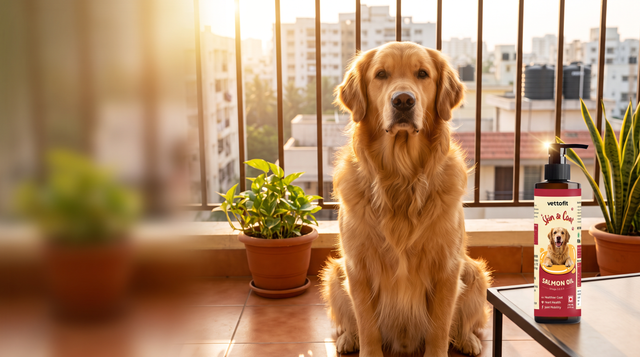
Vettofit Wild-Caught Alaskan Salmon Oil is formulated with EPA and DHA from wild-caught Alaskan salmon, vet-approved, and third-party tested. It is designed for Indian dogs on home-cooked or kibble diets who need omega-3 support for skin and coat health. Human-grade ingredients. No fillers. Made in India. Pour it over food daily. Most pet parents notice coat changes within 3 to 6 weeks.
#CareWithVettofit
Support your dog's coat from the inside
Wild-caught Alaskan salmon oil. Vet-approved. Human-grade. Made in India for Indian dogs.
EXPLORE SALMON OILFrequently asked questions
Last updated: August 2026