
On this page
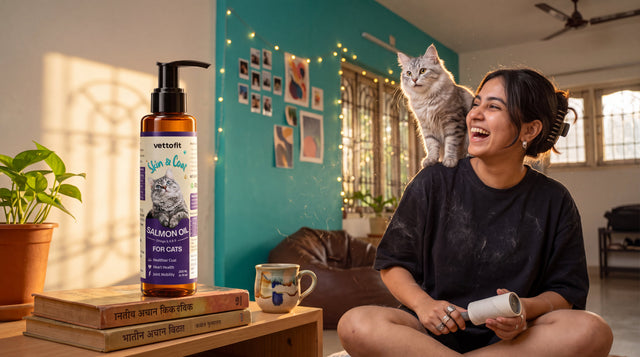
It's 11 at night. Ananya is on her knees with a lint roller, chasing grey fluff off the sofa. Her Indie cat, Biscuit, watches from the bookshelf. Ananya has three tabs open, all about cat supplements. She just wants to know one thing: does my cat need a supplement, or am I about to waste money?
Not every cat needs a daily supplement. A skin and coat supplement can make sense for a cat with a dull coat, heavy shedding or dry skin, once a vet has ruled out medical causes. If your cat eats a complete and balanced food and looks well, you may not need one at all.
We almost sold you something you didn't need
Here's a slightly awkward thing for a supplement brand to say. Most healthy cats don't need one.
The UK pet food trade body says it plainly. If a healthy cat eats a "complete" food, you generally shouldn't add extra vitamins or minerals on top. That food already carries the right balance for your cat's life stage. Cat foods made to AAFCO standards work the same way.
So why write this at all? Because "most cats" isn't "every cat." Some cats do better with a little help, especially for skin and coat. The trick is knowing which group your cat sits in. That's what the checklist below is for.
What is a cat skin and coat supplement?
A cat skin and coat supplement adds nutrients that support the skin barrier and fur. The best-studied ones carry omega-3 fats from fish, mainly EPA and DHA. You add them to your cat's normal food. They support a diet. They don't replace one, and they don't treat disease on their own.
"A supplement should be the last thing you add, not the first thing you try."
The honest checklist: yes, not yet, or see a vet
Read the three boxes in order. Start with the black one. If anything in it sounds like your cat, stop there and book a vet visit. The other two can wait.
SEE A VET FIRST
Any one of these means a supplement isn't the next step.
- Bald patches, scabs, red bumps or open sores
- Shedding that changed fast, in a week or two
- Constant scratching, licking or chewing at one spot
- A greasy, clumpy or matted coat that wasn't there before
- Weight loss, more thirst, more peeing, or a big appetite change
- Your cat is a kitten, a senior, pregnant, or on any medicine
- You've seen fleas, flea dirt or tiny moving specks
Why: fleas, allergies, ringworm, thyroid problems, diabetes and kidney disease can all show up in the coat first. A supplement can hide the clue your vet needs.
NOT YET
Fix these first. They often solve the coat on their own.
- Your cat's food doesn't say "complete and balanced" on the pack
- Your cat eats mostly home food, rice or dal with fish, or table scraps
- Your cat is overweight and can't reach to groom its back
- You haven't brushed your cat in weeks
- It's peak shedding season and the coat otherwise looks fine
- You moved house, got a new pet, or changed routines recently (stress shows in fur)
Why: a better base diet, regular brushing and a calmer home do more than any capsule.
A SUPPLEMENT MAY HELP
Your cat ticks most of these.
- Your vet checked your cat in the last year and found nothing medical
- Your cat eats a complete and balanced food
- The coat still looks dull, dry or rough to touch
- You see small white flakes when you part the fur
- Shedding stays heavy all year, not just one season
- Your cat lives indoors, often in air-conditioned or dry rooms
Why: this is the group where omega-3s have the most to offer. Your vet has already cleared the scary stuff.
How to run a two-week coat check
Before you decide anything, get a clear picture. This takes about five minutes a day.
- Take a "before" photo. Use daylight near a window. Shoot the back, the sides and the base of the tail. Same spot, same time of day.
- Brush once a day with a soft brush. Pull the fur off the brush and drop it in a small zip bag. Write the date on the bag.
- Part the fur in three places. Look at the skin. Pink and clean is good. Flakes, redness or black specks go in your notes.
- Run your palm down the back. Does it feel soft, rough, or oily? Write one word.
- Read the food label. Look for "complete and balanced" or "complete feed." If you can't find it, that's your first fix.
- Compare after 14 days. Line up the bags and photos. Then go back to the checklist with real notes, not a guess.
Take your notes and photos to the vet, too. They make the visit faster and far more useful.
Do cats need omega-3?
Yes. Cats need omega-3 and omega-6 fats in their diet because their bodies can't make them. A good complete food already includes both.
The question is whether your cat needs more. Here's the part most labels skip. Cats can't turn plant omega-3 (ALA, from flax or chia) into the useful forms very well. The forms that matter for skin, EPA and DHA, come mainly from fish and marine oils.
| Omega-3 type | Where it comes from | How useful for cats |
|---|---|---|
| EPA | Fish oil, salmon oil | Helps calm skin inflammation |
| DHA | Fish oil, salmon oil | Part of skin cell walls, eyes and brain |
| ALA | Flax, chia, some plant oils | Limited, since cats convert it poorly |
Vets often use omega-3s for cats with dry skin or itchy allergic skin. They also show up in care plans for older cats with stiff joints or kidney disease. That last part is your vet's call, not a reason to start on your own.
Why indoor cats come up so often
Indoor cats, including many city Indie cats, spend long hours in dry air. Fans, ACs and heaters pull moisture from skin. They also shed more evenly through the year because indoor light and heat stay steady. That doesn't mean every indoor cat needs omega-3. It means dry, flaky skin in an indoor cat is common, and worth a look.
If your cat passes the checklist: how to start
- Show your vet the product. Ask, "Is this dose right for my cat's weight?" Bring the label or a photo of it.
- Start with a small amount. Use a quarter to half of the label dose for the first week. Mix it into wet food your cat already loves.
- Watch the litter box. Soft stool or a fishy burp means you went too fast. Drop back and build up slower.
- Reach the full dose by week two. Stick to the label or your vet's number. More oil doesn't mean more shine.
- Judge it at 8 to 12 weeks. Hair grows in cycles, so new fur takes time to show. Retake your "before" photos in the same light and compare.
- Stop if nothing changes. If the coat looks the same after three months, talk to your vet again. That's useful information, not a failure.
Only for cats who landed in the teal box
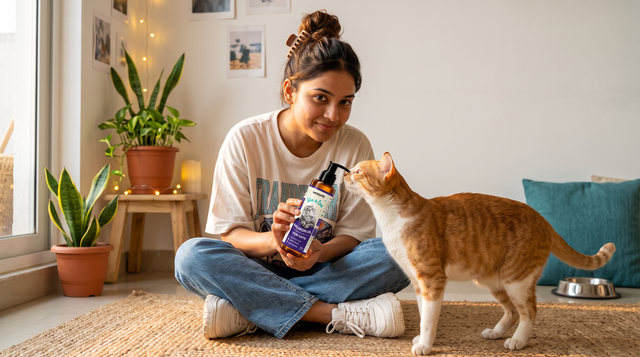
If your vet has cleared your cat and the coat still looks dull or dry, our Wild-Caught Alaskan Salmon Oil for Cats gives a simple, measured source of EPA and DHA. Vet-backed. Pet-loved.
See the salmon oil for cats Still in the black or amber box? Please sort those first. We'd rather you come back later than buy too soon.FAQs
Do cats need supplements?
Most healthy cats don't. A complete and balanced cat food gives them the vitamins, minerals and fats they need. Supplements help in specific cases, such as a cat with a dull coat or dry skin after a vet check, or a cat on a home-made diet planned by a vet nutritionist.
When should I give my cat omega-3?
Consider omega-3 when your cat has a dull coat, dry or flaky skin, or heavy shedding that stays all year, and your vet has ruled out fleas, allergies and illness. Give it daily with a meal. Ask your vet for the right dose for your cat's weight before you begin.
Can a supplement replace a vet check for coat problems?
No. Coat changes can be the first sign of fleas, ringworm, allergies, thyroid disease, diabetes or kidney problems. A supplement can't treat these, and it may hide the signs for a while. See your vet first, then add a supplement only if they agree it fits.
Do cats need omega-3 if they eat good food?
Cats need omega-3 in their diet, and a good complete food already contains some. Many healthy cats need nothing extra. Extra EPA and DHA from fish or salmon oil can help cats with dry skin, itchy allergic skin, or a coat that stays dull on a good diet.
Is a cat supplement for shedding worth it?
It can be, but only after you rule out the usual causes. Season, stress, weight, poor grooming and parasites drive most heavy shedding. Fix those first and brush daily. If shedding stays heavy and the coat looks dry, an omega-3 skin and coat supplement may help over a few months.
How long does a cat skin coat supplement take to work?
Give it at least 8 to 12 weeks. Fur grows in cycles, so the new, healthier hair takes time to replace the old. Take photos in the same light before you start and again at the three-month mark. That way you judge real change, not mood.
Is salmon oil safe for cats?
Salmon oil made for pets is safe for most healthy cats at the label dose. Too much can cause loose stool, a fishy smell or weight gain. Cats on blood thinners, cats with pancreatitis, or cats due for surgery need a vet's go-ahead first. Always start slow.
If Biscuit sounds like your cat, start with the two-week coat check tonight. Bring your notes to the vet. Then come back to this list with real answers in hand. We'll be here either way. #CareWithVettofit