
On this page
Ritu noticed it on a Sunday. Her black kurta came out of the cupboard with a fine grey coat on it. So did the sofa cushion. So did the bedsheet. Even the inside of her laptop bag. Her Persian, Mishti, sat by the window, very pleased with herself.
If your cat leaves a fur trail, you are not imagining it. Cats shed a lot. Most of the time it means nothing is wrong. Now and then, it is the first quiet sign that something is.
Cats shed year-round, with more shedding at seasonal changes. Shedding that leaves bald patches, red skin or a thinning coat needs a vet check. Brushing, diet and omega-3 support can help a normal coat.
The best cat shedding solution starts with one question. Does your cat's coat still look full? If yes, it is likely normal shedding you can handle at home. If no, see your vet first.
What normal cat shedding looks like
Each hair on your cat grows, rests and then falls out. A new one takes its place. That cycle never stops. So you will always find some fur on the floor.
- What is normal cat shedding?
- Normal shedding is the steady loss of old hair from the whole body. The coat stays full. Dr. Alison Diesel at Texas A&M puts it simply: with normal shedding, the coat still looks thick and even. That holds true even when your house is full of tufts.
Here is the part most of us miss. Dr. William Miller, a skin specialist at Cornell, says normal shedding is a whole-body event. Run a comb over your cat. You should pick up loose hair from all over, not from one spot. Normal shedding does not leave bald or sparse areas.
A few things change how much fur you see:
- Coat type. A long-haired Persian drops more fur you can see than a Siamese or a sleek Indie cat.
- Season. Many cats shed more as the weather turns. In India, you may see it before summer and again in the monsoon.
- Indoor life. Indoor cat shedding often runs all year. Fans, AC and indoor lights blur the signals of the seasons.
- Age. Older cats groom less. Loose hair stays on the coat, then lands on your sofa.
Normal vs. too much: a side-by-side check
Use this table with your cat in your lap, in good light. Part the fur in a few spots and look at the skin.
| What you see | Usually normal | Needs a vet check |
|---|---|---|
| Where hair comes from | All over the body | One area, or the same spots on both sides |
| Coat | Full and even | Thin, patchy or bald areas |
| Skin under the fur | Pale and smooth | Red, bumpy, scaly, scabbed or greasy |
| Grooming | Regular licking | Constant licking, chewing or scratching |
| Timing | Rises with the seasons, then settles | Sudden change that does not settle |
| Rest of the cat | Eating, playing, normal weight | Weight loss, thirst, hiding, eating less |
If everything lands in the middle column, breathe out. You are dealing with fur, not a health problem.
Why is my cat shedding so much?
When shedding crosses the line, vets call it hair loss, or alopecia. The MSD Vet Manual says hair loss is a sign, not the cause. Something else is behind it. These are the usual suspects.
Fleas and mites
The most common skin problem in cats. Many cats lick fleas away before you see one. So the itch shows up as hair loss first.
Allergies
Fleas, food, dust or pollen can all make skin itch. Your cat licks. The hair breaks. The coat thins.
Stress
A move, a new baby, a new pet or a stray at the window. Cornell vets note that nervous cats shed more, and some groom bald spots to calm down.
Ringworm
A fungus, not a worm. It leaves round, scaly bald patches. It can spread to people.
Diet gaps
VCA vets link low protein, low fat or missing fatty acids to a dull, dry coat. Patchy hair can follow. Home-cooked meals without a vet plan are a common reason.
Hormones and illness
Thyroid disease, diabetes and a recent serious illness can all show in the coat first.
A note for Siamese parents: Cornell names Siamese, Burmese, Himalayan and Abyssinian cats as breeds that often over-groom when stressed. Does your Siamese have a neat bald stripe on the belly or inner thighs? Think stress as well as skin.
What to check first, at home
Spend ten minutes on this first. Do it before you buy a new brush, shampoo or cat supplement for shedding. It tells you whether to manage at home or call your vet.
- Run the comb test. Comb from neck to tail, then down each leg. Loose hair from all over is normal. Hair coming out in one spot is not.
- Look at the skin. Part the fur at the base of the tail, belly and behind the ears. You want pale, smooth skin.
- Hunt for flea dirt. Comb over a white tissue and add a drop of water. Black specks that turn reddish-brown are flea droppings.
- Watch the grooming. For two days, notice how often your cat licks or scratches. Hours a day is too much.
- Check the basics. Is your cat eating, drinking and playing like usual? Any weight change? Anything new at home?
Bald patches, broken skin, flea dirt or a change in appetite all point to the vet. Treat the cause first. No brush or supplement will fix fleas or ringworm.
How to help a shedding cat
If your cat passed every check, you are in the good zone. Now the goal is less fur on the furniture and a stronger coat.
Brush little and often
Five minutes a day beats one long session a week. Short-haired cats do well with a rubber brush. Long-haired cats like Persians need a wide-tooth comb first, then a slicker brush. Each hair you catch is one less hairball. And one less tuft on the bed.
Feed a complete diet
VCA vets say skin and coat problems drive up to 25% of vet visits. Food plays a big part. Your cat needs enough protein, fat, fatty acids, zinc and copper. A complete cat food covers this. Plain rice and curd or leftover chicken does not.
Keep water easy to find
Dry skin sheds more. Place a few water bowls around the house, away from the food. Many cats drink more from a wide bowl or a fountain.
Make home calmer
Give your cat a high shelf, a hiding box and a fixed routine. If a stray outside sets your cat off, cover the lower half of that window.
Does salmon oil help cat shedding?
It can help a healthy coat, as part of the routine above. It does not replace a vet visit when something is wrong.
Omega-3s EPA and DHA help calm the skin and support its barrier. So the coat grows from healthier ground.
VCA vets name EPA and DHA as nutrients that help build a healthy skin barrier. That barrier keeps moisture in and irritants out. Salmon oil is one of the richest natural sources of both.
Two honest points from the research. First, VCA notes that omega-3s work best once the cause of the itch, like fleas, is under control. Second, the coat changes slowly. Give it a few weeks of daily use before you judge.
Does your cat have a health condition, take medicine or have surgery coming up? Talk to your vet before you add salmon oil.
The pass-the-checklist test
Salmon oil makes sense only if you can tick every box below.
- The coat looks full, with no bald or thin patches.
- The skin is pale and smooth, with no redness or scabs.
- No flea dirt, and flea prevention is up to date.
- Your cat is eating, playing and holding a steady weight.
- You already brush a few times a week and feed a complete diet.
One box left empty? Start with your vet. All five ticked? Then a daily omega-3 may be the small extra your cat's coat needs.
For cats who passed the checklist
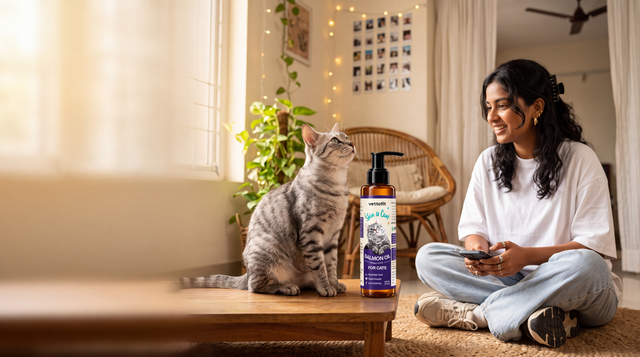
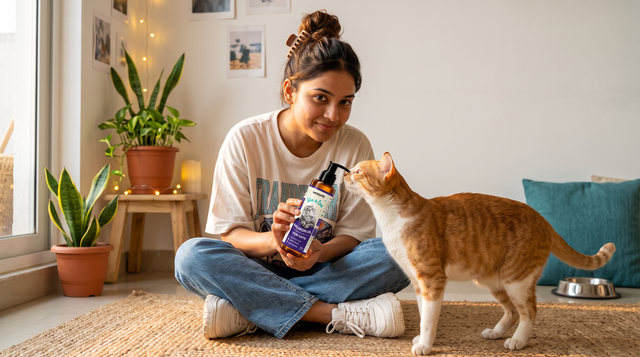
Vettofit's Wild-Caught Alaskan Salmon Oil for Cats gives your cat EPA and DHA from wild-caught fish. Pump it onto food once a day, following the guide on the pack for your cat's weight.
See the salmon oil for catsVet-approved formula. Not a treatment for skin disease.
Questions cat parents ask
Why is my cat shedding so much?
Most heavy shedding is normal. It often comes with the seasons, more so in long-haired cats like Persians. If the coat stays full, it is likely fine. Bald patches, red skin or constant licking point to a cause. It may be fleas, allergies, stress, ringworm, a diet gap or a hormone problem. A vet can find which one.
What is normal cat shedding?
Normal shedding is loose hair from all over the body while the coat stays thick and even. It often rises when the seasons change and then settles. You will find fur on your sofa and clothes. But your cat will not have bald spots, thin areas or sore skin.
Does salmon oil help cat shedding?
Salmon oil gives cats omega-3 EPA and DHA. These help calm the skin and support its barrier. That can help a healthy coat over a few weeks. It works best alongside brushing and a complete diet. It will not fix shedding from fleas, infection or illness. See your vet first if you notice bald patches.
Do indoor cats shed more than outdoor cats?
Indoor cats often shed at a steady rate all year instead of in two big bursts. Indoor light, fans and AC blur the signals of the seasons. The total amount is not always higher, but it feels constant. Daily brushing helps most with indoor cat shedding.
When should I take my shedding cat to the vet?
See your vet if you notice bald or thin patches, red or scaly skin, scabs or flea dirt. Hours of licking, or a change in hunger, thirst or weight, also need a check. Ringworm can spread to people, so round scaly patches need a quick check.
Is there a cat supplement for shedding that works?
Omega-3s from fish oil have the best support for skin and coat health in cats. They support the skin barrier rather than stopping shedding outright. Pick one made for cats and follow the dose for your cat's weight. Give it a few weeks before you judge.
How often should I brush my cat to reduce shedding?
Short-haired cats do well with brushing two or three times a week. Brush daily when shedding is heavy. Long-haired cats like Persians need daily combing to stop mats and hairballs. Short sessions of about five minutes work better than long ones.
Next time you find Mishti's grey fur on your black kurta, run the comb test. Full coat, calm skin, happy cat? Then the fur on your clothes is just proof that someone small and soft lives with you. Keep a lint roller by the door. And give the coat a little help from the inside.