
On this page
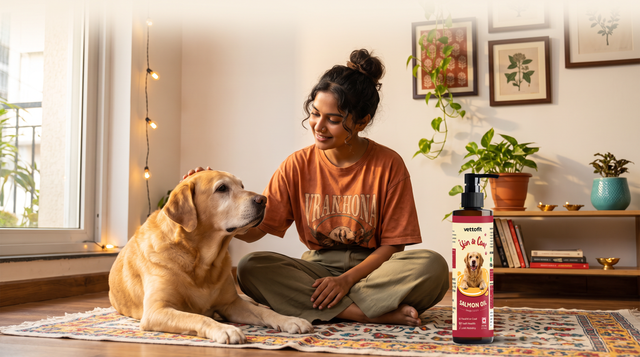
Rohan noticed it on a Wednesday morning. His two-year-old Labrador, Bruno, had stopped scratching behind his left ear. The flaky patches near his neck were smaller. His coat, dull and rough for months, had a faint shine under the balcony light. The only thing Rohan had changed two weeks ago was adding salmon oil to Bruno's kibble.
That moment, quiet and undramatic, is exactly how the best salmon oil for dogs in India works. Not overnight. Not with fireworks. Just a slow, steady shift you notice one ordinary morning.
The best salmon oil for dogs in India is wild-caught, cold-pressed, and rich in EPA and DHA omega-3 fatty acids. Look for a product that lists exact EPA/DHA milligrams per serving, uses no artificial preservatives, and is third-party tested. Wild-caught Alaskan salmon oil is widely considered the gold standard because of its high omega-3 concentration and low contaminant levels. Results for skin and coat typically become visible over 3 to 4 weeks of daily use.
Why does salmon oil matter for dogs in India?
Indian dogs face a unique combination of heat, humidity, and diets low in omega-3 fatty acids. Most home-cooked meals (rice, roti, chicken, curd) and many commercial kibbles sold in India lack sufficient EPA and DHA. Salmon oil fills that gap directly, supporting skin health, coat quality, and joint function in a form dogs actually enjoy eating.
If your dog eats a mix of home food and kibble (and most Indian dogs do), their diet likely skews heavy on omega-6 fats and light on omega-3. That imbalance shows up on the body. Dry, flaky skin. A coat that feels rough. Seasonal shedding that goes on longer than it should.
Indian climate makes it worse. Humidity during monsoon triggers fungal skin problems. Air conditioning in winter dries out skin and fur. Summer heat increases inflammation. And if your dog lives in a Bengaluru apartment or a Mumbai high-rise, limited sun exposure adds another layer.
Omega-3 fatty acids, specifically EPA (eicosapentaenoic acid) and DHA (docosahexaenoic acid), work at the cellular level. According to research published in the Journal of Veterinary Internal Medicine, EPA supports the body's natural response to inflammation, while DHA plays a role in brain and eye development. For adult dogs, this translates to healthier skin, less itching, and a coat that feels softer over time.
Vet tip
A dog's skin renews itself every 21 to 28 days. That is why most vets suggest giving salmon oil daily for at least 4 weeks before judging results. Consistency matters more than dosage increases.
What makes one salmon oil better than another?
Not all salmon oil is equal. The difference between a bottle that works and one that sits in your cabinet doing nothing comes down to five things you can check on the label before buying.
1. Wild-caught vs farmed salmon
Wild-caught salmon (especially from Alaskan waters) feeds on a natural diet of krill, algae, and smaller fish. This produces oil with higher EPA and DHA concentrations and lower levels of contaminants like PCBs and heavy metals. Farmed salmon eats commercial feed, and the resulting oil often has a less favourable omega-3 to omega-6 ratio.
The label should say "wild-caught" or "wild Alaskan." If it just says "salmon oil" with no source, that is usually farmed.
2. EPA and DHA levels per serving
This is the number that matters most, and the one most brands in India skip. A good salmon oil for dogs lists the exact milligrams of EPA and DHA per pump or per millilitre. Without this number, you are guessing.
As a general reference, the National Research Council (NRC) guidelines suggest that dogs benefit from combined EPA and DHA in their daily diet, though exact amounts depend on body weight and health status.
3. Extraction method
Cold-pressed or cold-extracted salmon oil retains more of its natural nutrients. Heat-processed oils lose a portion of their EPA and DHA during production. If the label says "cold-pressed" or "cold-extracted," that is a good sign.
4. Preservatives and additives
The best fish oil for dogs in India uses natural antioxidants like vitamin E (mixed tocopherols) to prevent oxidation. Avoid products with artificial preservatives, artificial colours, or added flavourings. If the ingredient list is longer than 3 to 4 items, look more carefully at what else is in the bottle.
5. Third-party testing
Any brand that sends its product to an independent lab for purity and potency testing will say so clearly. Third-party tested salmon oil gives you a layer of trust that the label matches what is actually inside.
Salmon oil buyer's checklist: what to compare
When you are comparing options online or standing in a pet store, use this checklist. It covers the factors that actually affect whether the product will help your dog's skin and coat.
| Factor | What to look for | Red flag |
|---|---|---|
| Source | Wild-caught Alaskan salmon | No source mentioned, or "fish oil blend" |
| EPA + DHA | Milligrams listed per serving | Only "omega-3" listed without EPA/DHA breakdown |
| Extraction | Cold-pressed or cold-extracted | No extraction method stated |
| Preservative | Natural vitamin E (tocopherols) | BHA, BHT, ethoxyquin, or artificial additives |
| Testing | Third-party lab tested | No mention of independent testing |
| Format | Pump bottle (easier to dose, less oxidation) | Open-mouth bottle with no dispenser |
| Grade | Human-grade ingredients | Feed-grade or no grade mentioned |
| Made in | GMP-certified facility | No manufacturing standard stated |
Quick check
Flip the bottle and read the back label first. If the product scores 6 out of 8 on this checklist, it is likely a solid choice. Below 4, keep looking.
Fish oil vs salmon oil for dogs: is there a real difference?
Yes. Salmon oil is a type of fish oil, but it differs from generic fish oil blends. Pure salmon oil from wild-caught sources typically has a higher concentration of EPA and DHA per serving, along with naturally occurring astaxanthin (a carotenoid antioxidant). Generic fish oil may come from mixed sources like anchovies, sardines, or mackerel, and the omega-3 profile can vary widely between batches.
Some pet parents ask about cod liver oil vs salmon oil. The key difference: cod liver oil contains high levels of vitamins A and D, which can build up in a dog's system if over-supplemented. Salmon oil delivers omega-3 without the fat-soluble vitamin risk, making it safer for daily, long-term use.
| Feature | Salmon oil (wild-caught) | Generic fish oil | Cod liver oil |
|---|---|---|---|
| EPA + DHA | High, consistent | Variable by source | Moderate |
| Astaxanthin | Naturally present | Typically absent | Absent |
| Vitamin A/D risk | Low | Low | High (can accumulate) |
| Safe for daily use | Yes | Yes, if quality verified | Needs careful dosing |
| Best for | Skin, coat, joints | General omega-3 support | Short-term vitamin boost |
How to give salmon oil to your dog (the right way)
Add salmon oil directly to your dog's food once a day. A pump bottle makes dosing simple. Start with a smaller amount for the first 3 to 5 days and increase to the full dose gradually. Most dogs accept the taste without fuss. Store the bottle in a cool, dark place and use it within 90 days of opening.
The easiest method: one pump over kibble or mixed into home-cooked food at mealtime. Morning or evening does not matter, as long as you pick one time and stick with it.
For picky eaters, try mixing the oil into a small portion of curd or dal before adding it to the main meal. The goal is daily consistency. Skipping days slows down results noticeably.
Dosage reference by dog weight
Always follow the dosage on your specific product's label. The figures below are a general reference and should not replace label instructions.
| Dog weight | Suggested daily amount | Common breeds (India) |
|---|---|---|
| Up to 10 kg | 1 to 2 ml (about 1 pump) | Pomeranian, Shih Tzu, Indie (small) |
| 10 to 25 kg | 2 to 4 ml (2 pumps) | Beagle, Cocker Spaniel, Indie (medium) |
| 25 to 40 kg | 4 to 6 ml (3 pumps) | Labrador, Golden Retriever, German Shepherd |
| Over 40 kg | 6 to 8 ml (4 pumps) | Rottweiler, Great Dane, Saint Bernard |
Vet tip
If your dog has a sensitive stomach, start at half the suggested amount for the first week. Salmon oil is generally well-tolerated, but a sudden large dose can cause loose stools in some dogs.
What results to expect (and when)
One of the most common questions about omega-3 supplements for dogs in India is how long they take to work. The honest answer: it depends on your dog. But here is a realistic timeline based on what most pet parents report.
| Week | What you may notice |
|---|---|
| Week 1 | Better appetite. Most dogs like the taste and finish meals faster. |
| Week 2 | Skin feels less dry to the touch. Flaking may reduce. |
| Week 3 to 4 | Coat starts to look shinier. Shedding may begin to slow down. |
| Week 6 to 8 | Visible coat softness. Scratching episodes often reduce noticeably. |
These are general observations, not promises. Every dog responds differently. Breed, age, diet, underlying health, and even the local climate play a role. A Golden Retriever in humid Chennai may take longer to show coat changes than a Beagle in dry Jaipur.
If you see no change after 6 weeks of daily use, talk to your vet. There may be an underlying condition that salmon oil alone cannot address.
5 mistakes to avoid when buying salmon oil in India
The Indian market has grown fast, and not every product on Amazon or Flipkart meets the same standard. Here are the five mistakes that lead to wasted money and disappointed pet parents.
1. Choosing by price alone
The cheapest bottle is almost never wild-caught. Low-cost options are typically farmed fish oil blends with lower omega-3 content. You end up giving more oil per day to match the same EPA/DHA levels, which makes the "savings" disappear.
2. Ignoring the EPA/DHA breakdown
A label that says "rich in omega-3" without listing EPA and DHA milligrams is not giving you enough information. Two products with the same total omega-3 can have very different EPA/DHA ratios, and those ratios determine how effective the oil is for skin and coat health.
3. Buying capsules instead of liquid
Capsules work for humans. For dogs, liquid oil mixed into food is easier to dose accurately and absorbs faster. Capsules also tend to have lower omega-3 per serving and cost more per milligram.
4. Not checking the expiry and storage
Omega-3 fats oxidise when exposed to heat, light, and air. In Indian summers, a bottle left on a kitchen counter can go rancid within weeks. Always store salmon oil in a cool place and use it within the timeframe printed on the bottle after opening.
5. Expecting overnight results
Salmon oil supports skin health over time. The skin renewal cycle in dogs takes 3 to 4 weeks. Stopping after 10 days because "nothing happened" means you never gave the oil a fair chance.
Which Indian dog breeds benefit most from salmon oil?
Every dog can benefit from omega-3 supplementation. But some breeds common in India respond faster because of their specific skin and coat challenges.
Labrador Retrievers are prone to skin allergies and excessive shedding in Indian heat. Their double coat traps moisture during monsoon, creating a perfect environment for itching and hot spots. EPA from salmon oil supports the skin's natural barrier.
Golden Retrievers have long, dense coats that lose shine quickly in Indian conditions. DHA helps maintain coat texture and softness. Many Golden Retriever parents report visible coat improvement within 3 to 4 weeks.
German Shepherds shed heavily year-round in India's climate. Salmon oil does not stop shedding (that is normal), but consistent omega-3 intake may help reduce the volume of loose fur.
Indie dogs adopted from shelters often arrive with dry, rough coats and stressed skin. Salmon oil, added to a balanced diet, gives their coat the nutritional building blocks it needs to recover.
Shih Tzus and Pomeranians, popular in Indian apartments, deal with dry skin from air-conditioned rooms. Their smaller body size means they need less oil per day, and results often show faster.
Salmon oil is a supplement, not a medicine. It supports skin and coat health but does not treat, cure, or prevent any disease. If your dog has persistent itching, hair loss patches, redness, or skin infections, please consult your veterinarian before starting any supplement. Dogs on blood-thinning medication or those with pancreatic conditions should only use omega-3 supplements under veterinary supervision.
Reviewed by [NEEDS INPUT: Vet Name, BVSc & AH / MVSc] · Vettofit Vet PanelA salmon oil built for Indian dogs
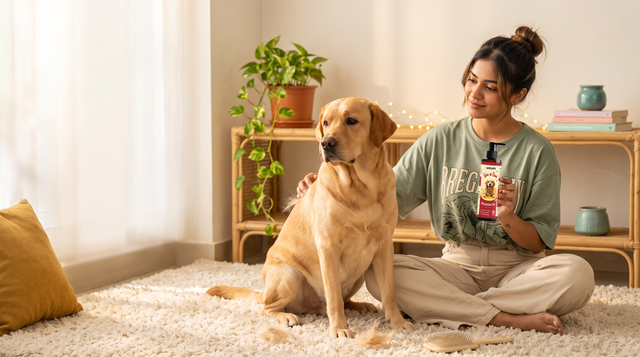
Vettofit Wild-Caught Alaskan Salmon Oil is made from wild-caught Alaskan salmon, cold-pressed to preserve EPA and DHA. It contains omega 3-6-9 fatty acids and vitamin E, uses no artificial preservatives, and comes in a pump bottle designed for easy daily dosing. The product is third-party tested, human-grade, and manufactured in a GMP-certified facility in India. You can find it on Amazon.in or at vettofit.com.
#CareWithVettofit
Wild-caught. Cold-pressed. Made for Indian dogs.
Vettofit Alaskan Salmon Oil. Human-grade omega-3, vet-approved, free shipping across India.
EXPLORE SALMON OILFrequently asked questions
Is salmon oil safe for puppies? ▼
Can I give salmon oil to my dog every day? ▼
Does salmon oil help with dog shedding? ▼
What is the difference between fish oil and salmon oil for dogs? ▼
Can I give salmon oil if my dog eats home-cooked food? ▼
Are there any side effects of salmon oil for dogs? ▼
How should I store salmon oil in Indian weather? ▼
Can I give salmon oil to my cat as well? ▼
Keep reading
Last updated: August 2026